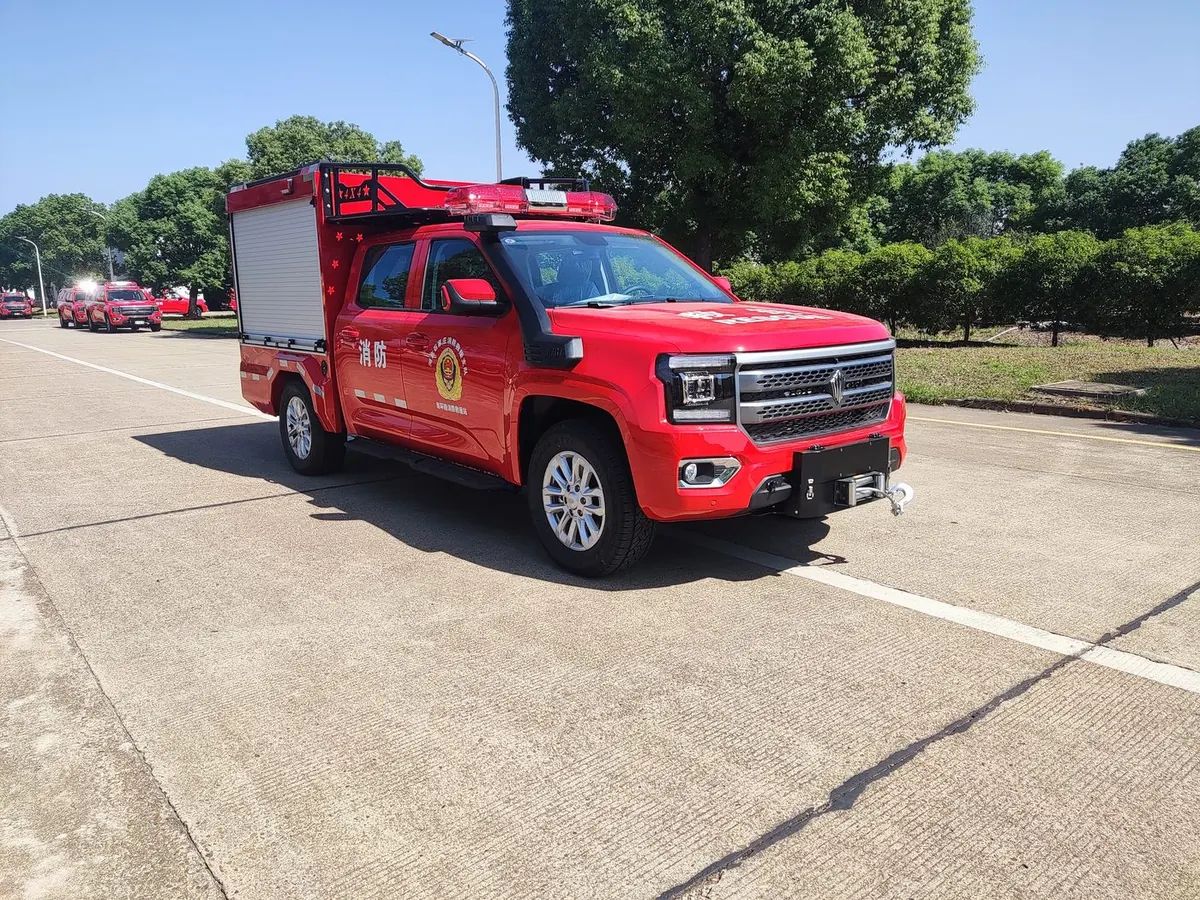
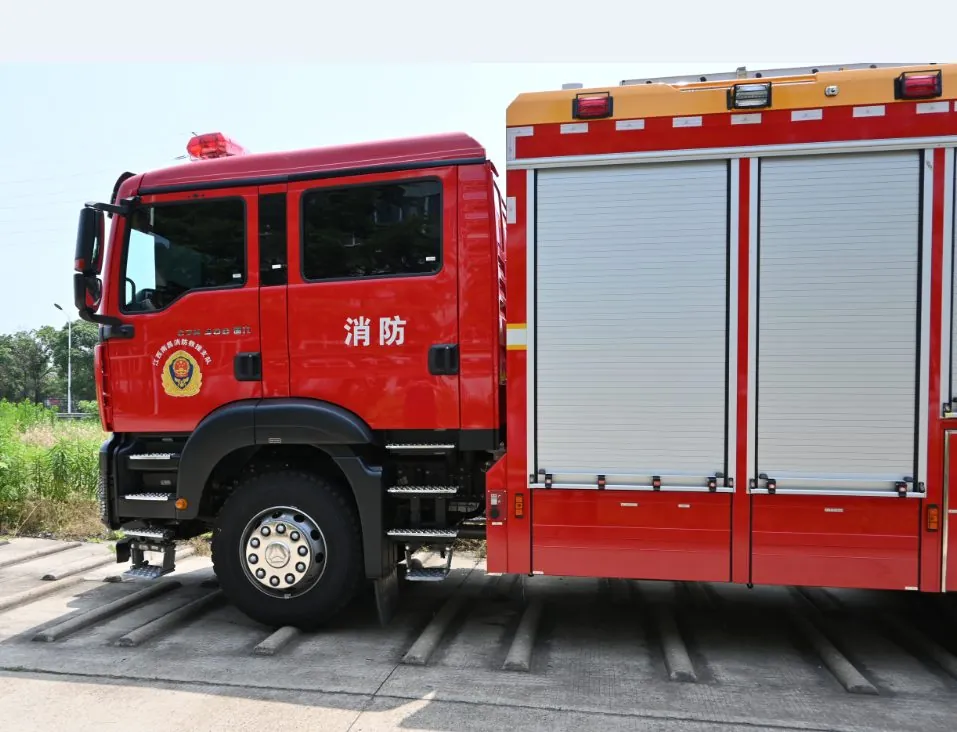
Eleven new mandatory Chinese standards for fire trucks take effect on 1 January 2027, covering everything from general requirements to airport and command vehicles. A 2 November report describes how upfitter Zhenxiang and Mercedes-Benz Trucks are co-developing vehicles on Atego, Arocs and Unimog chassis to certify before the deadline.
A report published on 2 November 2026 by Yunshuren, a Chinese commercial-vehicle trade publication, describes how Jiangsu Zhenxiang Vehicle Equipment moved from simply buying Mercedes-Benz chassis to joint development with the truck maker. Zhenxiang, founded in Suzhou in 2010, now builds more than 200 models across 8 categories and 42 units, and its ten main models are matched to the truck maker's core chassis range. The two companies now work together on model customisation, technical iteration, whole-vehicle commissioning, compliance certification and after-sales support.
The deadline driving that work is regulatory. Eleven mandatory national standards for fire trucks take effect on 1 January 2027. They belong to the GB 7956 series, and Part 1, general technical conditions, is itself a revision - GB 7956.1-2025 - that replaces the 2014 edition; the other ten are newly written and cover specialised types including high-expansion foam, water-mist, airport, communications command, chemical rescue, decontamination, equipment and hook-lift trucks. According to the report, Mercedes-Benz ran standards research in advance and supplied compliance support so that Zhenxiang could certify its vehicles early rather than reworking specifications after the deadline.
The chassis detail is where the conversion trade should look. On the Atego, the report cites an OM-series engine and PowerShift 3 automated transmission rated at up to 300 hp and 1,200 Nm, a 50 mm frame hole spacing and a modular design that needs no extra drilling or welding, which the partners say preserves more than 95 percent of factory performance. Several power take-off points are matched to fire pumps, shortening the body-building cycle. Arocs covers elevated platforms, large water and foam tanks and chemical response, with 8 to 10 crew and 4 to 6 tonnes of liquid capacity, while Unimog covers all-terrain work. Mercedes also supplies ABA 6 plus active brake assist with 270-degree sensor fusion, aimed at low-speed response, junctions and narrow-lane turns.
Outside China, the practical point is that a fire truck is now a two-part compliance problem: chassis certification and body certification have to line up, and both are moving targets. Zhenxiang adapted the new-generation Atego, which entered the Chinese fire market in June 2024 to China VI emissions, and says it completed body adaptation and whole-vehicle certification first - the kind of sequencing that decides whether a tender delivery slips into the next model year.
Ask for the standard edition, not just the standard name. A truck certified to the 2014 edition and one certified to the 2025 edition can look identical on a specification sheet, so write the standard number and edition into the purchase contract and the acceptance criteria. Then treat the chassis interface as a delivery-risk item: frame hole pattern, power take-off count and position, and body-mount points decide how long the conversion takes and how much of the factory wiring and warranty survives it. Finally, if delivery lands after 1 January 2027, confirm in writing which edition the vehicle will be certified to, because that date - not the order date - is what an inspector or a fleet auditor will read.
Source: Yunshuren 运输人网
This article is an original plain-language summary published by AUTOSMODS. Figures quoted belong to the original report.
Send your requirement list — feasibility answer within one working day.