Medical & Ambulance

Ambulances Built to Order, for Export Markets

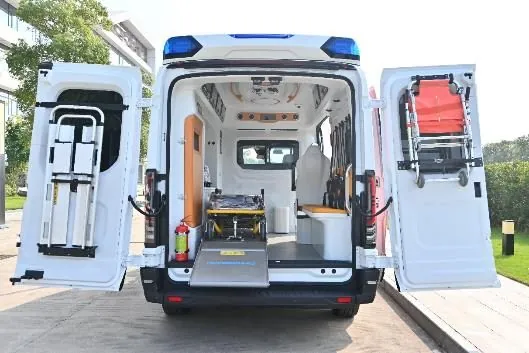
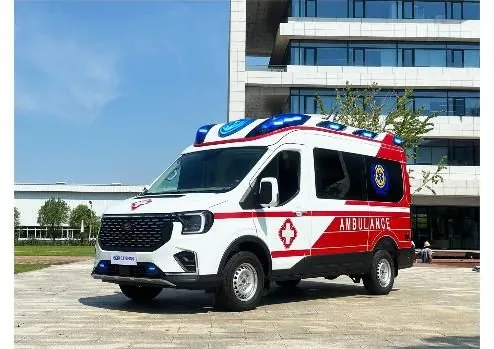
AUTOSMODS builds ambulances to order on Ford Transit T8 (V363) van and JMC Baodian 4x4 pickup chassis: transport, monitoring, intensive-care and negative-pressure isolation layouts, each engineered with oxygen, suction, inverter power and cabin lighting, and inspected against a 21-point factory checklist before shipment. Orders start from a single unit, and the final specification is agreed against your market's homologation rules.

28+years building special vehicles
300+vehicle models in production
220national patents, 12 of them inventions
21quality checks before every delivery

Key facts at a glance

Base chassisFord Transit T8 (V363) van; JMC Baodian 4x4 pickup
Body typeBox-type conversion, high roof, integrated flat floor
LayoutsTransport, monitoring, intensive care, negative-pressure isolation
Medical systemsOxygen manifold, suction, 220 V inverter, cabin lighting
Negative pressureIsolated cabin with HEPA filtration and directional airflow
Quality gate21-point factory inspection before delivery
Order sizeFrom one unit
PriceQuoted per configuration — request a quotation
HomologationFinal specification agreed at contract stage per destination market

Ambulance procurement really comes down to three questions: will the vehicle be registrable in your country, does the cabin layout support the treatments your crews actually perform, and can the builder repeat the same build quality across a fleet. Our export team works backwards from the mission profile — destination market, crew size, patient volume, road conditions and the equipment you already own — then matches it to a chassis and a cabin.

Every conversion starts from a base vehicle rather than a cut-and-shut body. The Ford Transit T8 (V363) gives a high, flat-floored box with a wide side door for stretcher handling. The JMC Baodian 4x4 pickup is used where the road ends before the patient does. Electrical architecture is integrated with the OEM system rather than tapped onto it, so warning, lighting and climate systems behave predictably over the vehicle's service life.

Configurations

Each configuration is a starting point — equipment, layout and finish are set per order.

01Transport ambulance

Stretcher, two attendant seats, oxygen and suction. The workhorse layout for municipal EMS fleets and inter-facility transfers where clinical load is low but availability matters.

02Monitoring ambulance

Adds patient monitoring, infusion mounts and a wider working aisle so a paramedic can attend while the vehicle is moving. Specified by services running pre-hospital critical care.

03Intensive-care ambulance

Full ICU capability in a van body: ventilator, multi-parameter monitor, infusion pumps, dedicated power and a sealed clinical compartment. Built for neonatal and high-acuity transfers.

04Negative-pressure ambulance

An isolated cabin held at controlled negative pressure, with HEPA filtration and directional airflow so contaminated air leaves through the filter rather than the crew compartment.

Where it is used

The same chassis carries different bodies depending on who operates it and what the duty cycle looks like.

Municipal EMS fleets

Standardised builds repeated across a fleet, with a common spare-parts list so depot maintenance stays simple.

Private and hospital transfers

Lower-acuity transport, where running cost and availability matter more than equipment density.

Rural and remote services

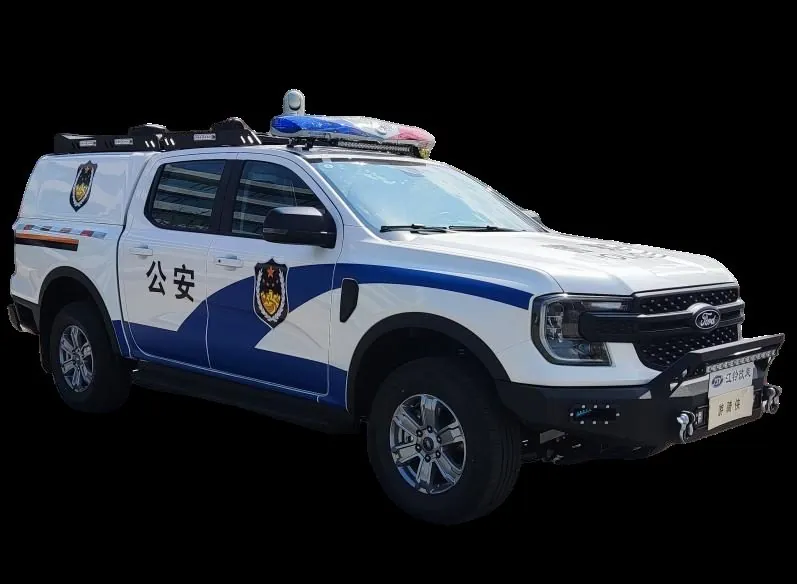
4x4 pickup-based ambulances for roads a full-size van cannot take, including seasonal and unpaved routes.

Public-health response

Negative-pressure units for outbreak response, screening and patient movement during infectious-disease events.

Representative models

A selection from this line. Every unit is re-engineered to your specification.

How a build runs

  1. Requirement

    Mission profile, destination market and equipment list

  2. Design

    Layout drawings and a fixed specification

  3. Chassis

    Base vehicle sourced to the agreed configuration

  4. Body build

    Welding, paint and assembly at 195 custom stations

  5. Inspection

    21-point factory check before release

  6. Shipment

    Export documentation and loading

Questions buyers ask

Which ambulance models can you build?

Transport, monitoring, intensive-care and negative-pressure isolation ambulances on Ford Transit T8 (V363) vans, plus compact 4x4 ambulances on the JMC Baodian pickup. The catalogue shows representative builds — every unit is configured to the buyer's own specification.

Can you supply an ambulance for right-hand-drive markets?

Drive configuration, lighting standards and equipment are agreed at contract stage against your market's registration and homologation requirements. Send us the destination country and we will confirm what is feasible before you commit.

What is the minimum order quantity?

One unit. Fleet buyers usually start with a single evaluation vehicle, then place a repeat order once the build has been accepted.

How long does delivery take?

Lead time depends on chassis availability and how far the specification departs from a catalogued layout, and it is fixed in the contract. In practice chassis supply, not body building, is the longer constraint.

What documents come with the vehicle?

Commercial invoice, packing list, bill of lading, chassis and body documentation, and the conformity paperwork your market requires — the exact list is agreed at contract stage.

Why is there no price on this page?

An ambulance price is driven by the chassis, the layout and the equipment list. Quoting a number before those are fixed misleads buyers, so we price against a defined configuration instead.
Other product lines

Related questions

Straight answers from our engineering and export teams.

Browse the full knowledge base (42 questions) →

Send us the mission profile

Destination country, crew size, patient load and the equipment you already own — that is enough for us to come back with a costed configuration.

Chat with us