Medical line · Infection control

Negative-Pressure Ambulance

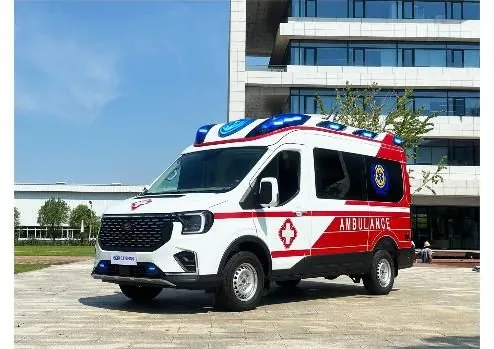
An ambulance whose patient cabin is held below ambient pressure, so air flows inward and exhausts only after HEPA filtration. Built with a sealed partition, an independent extraction unit and a visible pressure gauge, it is the transport configuration used for confirmed or suspected infectious cases.

Key facts

Base chassisFord Transit platform, wheelbase selected to the required cabin length
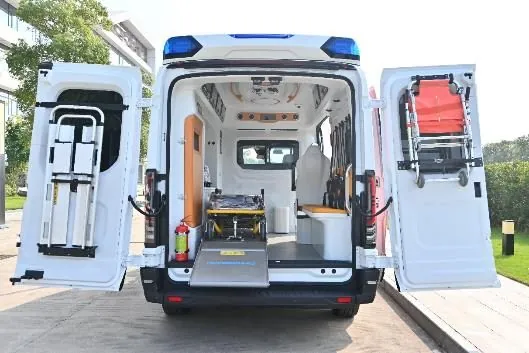
CabinSealed patient compartment with independent liner and washable surfaces
Air pathHEPA-filtered extraction creating controlled negative pressure, with pressure gauge and alarm
IsolationSealed partition between driver and patient cabin, separate ventilation for the cab
Disinfection supportSmooth, non-porous surfaces and drainage arranged for routine chemical disinfection
DeliveryComplete vehicle, or body kits for local assembly

Negative pressure is not a filter bolted to a roof vent. It is a pressure relationship: the extraction unit must move more air out of the cabin than leaks in, and the cabin must be tight enough for that difference to be maintained. Every joint, gasket, cable pass-through and door seal therefore matters as much as the filter itself.

Our patient cabin is built as a separate liner inside the body shell. Services — oxygen, suction, electrical, lighting — run in a service cavity behind that liner so no cable penetrates the sterile envelope except through a sealed gland. The pressure gauge sits where the attendant can see it during transport, with an alarm if the differential falls outside the set band.

This configuration was delivered in China's first national batch of negative-pressure ambulances in 2020, and the design has been refined through public-health deployments since. The practical lesson from those deployments is serviceability: filters, seals and the extraction unit are reachable from outside the patient cabin, so routine maintenance does not require opening the sterile envelope.
Configurations

Each configuration is a starting point — equipment, layout and finish are set per order.

01Standard isolation

Single-patient cabin, HEPA extraction, pressure gauge and alarm, sealed partition.

02Monitoring isolation

Adds monitor bracket, infusion pole and a 220 V circuit so a nurse can monitor the patient inside the cabin.

03Dual-patient variant

Longer wheelbase with two stretcher positions on a shared extraction circuit, both within the same pressure envelope.

04Decontamination package

Interior drainage, chemical-resistant floor covering and an external wash point for post-transport decontamination.

Where it is used

The same platform carries different fit-outs depending on who operates it.

Public-health and CDC teams

Confirmed or suspected cases moved from home or clinic to a designated treatment facility.

Hospital infectious-disease units

Transfer between isolation wards and referral hospitals without contaminating the vehicle cab.

Airport and border health posts

Screening points that must move a suspected case without exposing staff or the terminal environment.

Other models in this line

Every unit is re-engineered to your specification.

Related product lines

Questions buyers ask

How is negative pressure verified?

The cabin is leak-tested at build, and the pressure differential is displayed on a gauge with an alarm band during operation. Acceptance figures for your procurement can be agreed in the contract specification.

Can the ambulance also be used for normal transfers?

Yes. With the extraction unit running in normal mode it behaves as a standard monitoring ambulance. The isolation configuration adds capability rather than restricting use.

Are filters and seals available as spare parts?

Yes. Filter elements, door gaskets and extraction-unit components are listed as service items, and we can supply a maintenance kit with the vehicle order.

Which markets has this configuration been supplied to?

The platform has been deployed in mainland China public-health fleets since 2020. For other markets the electrical and medical fit-out is reviewed against local registration and infection-control requirements before the specification is frozen.

Related questions

Straight answers from our engineering and export teams.

Browse the full knowledge base (42 questions) →

Discuss an isolation transport requirement

Tell us the patient profile, the route and the disinfection protocol you follow. We will propose a cabin and air-handling specification.

Chat with us