A compact 4x4 ambulance built on the JMC Baodian pickup chassis, with a purpose-built patient box behind the cab. It exists for the roads a van ambulance cannot use: village tracks, unpaved mountain roads, plantation and mine access routes, and lanes too narrow for a box van to turn.
| Base chassis | JMC Baodian 4x4 pickup, diesel |
|---|---|
| Body | Dedicated patient box on the rear chassis, separate from the cab |
| Drive | Four-wheel drive with high and low range for unsealed and graded roads |
| Patient position | Single stretcher with attendant seat, side-loading rear doors |
| Systems | Oxygen, suction, interior lighting, 12 V and optional inverter circuit |
| Delivery | Complete vehicle, or body kits for local assembly |
Most ambulance procurement assumes a paved road. In practice a large share of the world's population lives where the last five kilometres are not paved, and a box van with a low floor and a long rear overhang cannot get through, or arrives with a patient who has been shaken for forty minutes. A pickup-based ambulance accepts a worse road and delivers a better journey.
The patient box is a separate structure mounted on the rear chassis rather than a canopy over the load bed. That distinction matters: a box carries its own floor, insulation, oxygen circuit and mounting rails for the stretcher, and it can be sealed against dust — which a soft or hard canopy cannot. The box is also shorter than a van body, so the rear overhang stays within what a rough track will tolerate.
Because the cab is the standard production cab, spare parts and service knowledge are widely available, and driver training is minimal. That is often the deciding factor for district health authorities operating a handful of vehicles far from a dealer.
Each configuration is a starting point — equipment, layout and finish are set per order.
Stretcher, attendant seat, oxygen and suction — the minimum viable rural transfer specification.
Adds monitor bracket, infusion pole and an inverter circuit for inter-facility moves with a nurse.
Positive-pressure cab-to-box seal and filtered ventilation for dry, dusty operating regions.
Insulated box, auxiliary heater and heated oxygen regulator for high-altitude or winter operation.
The same platform carries different fit-outs depending on who operates it.
Rural referral networks where the nearest paved road is several kilometres from the village.
On-site medical response where the access road is graded rather than surfaced.
Settlements served by narrow, steep or seasonally damaged roads.
Every unit is re-engineered to your specification.

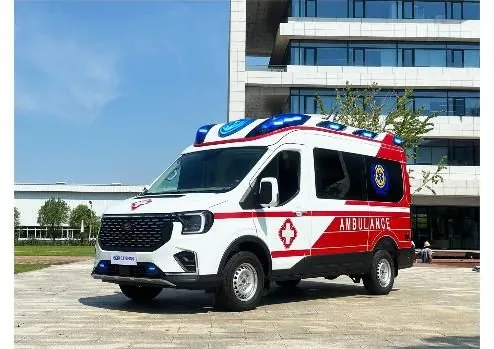
Box-type conversion on the Ford Transit T8 chassis. Transport, monitoring and intensive-care layouts with oxygen, suction and inverter systems.

Isolated cabin with controlled negative pressure and HEPA filtration — the design delivered in China's first national batch in 2020.
The standard box carries one stretcher plus an attendant seat. A longer box with two stretcher positions can be specified, but it reduces the manoeuvrability that makes this vehicle useful in the first place.
For unpaved or seasonally flooded routes, yes. Where the vehicle will only ever run on surfaced roads, a two-wheel-drive chassis lowers cost and fuel consumption.
The box is a mounted structure and can be separated for service, but it is not intended for daily removal. Buyers who need a dual-purpose vehicle should say so at specification stage; a demountable variant can be engineered.
The standard circuit accepts a portable cylinder carried in a secured bracket, with an optional larger reserve. We do not supply medical gas itself — that is sourced locally to your regulations.
Straight answers from our engineering and export teams.
An ambulance is quoted per configuration, never from a list price. The chassis usually accounts for 35-50% of the…
ComplianceCan you build an ambulance to EN 1789?Yes. EN 1789 is the European standard for medical vehicles and ambulances, and it can be used as the design basis for…
ComplianceWhat is the difference between Type A, Type B and Type C ambulances?Type A is a patient transport vehicle, Type B is an emergency ambulance, and Type C is a mobile intensive care unit…
Tell us the road condition, the altitude and the distance to the referral hospital. We will propose a chassis and box configuration that matches.