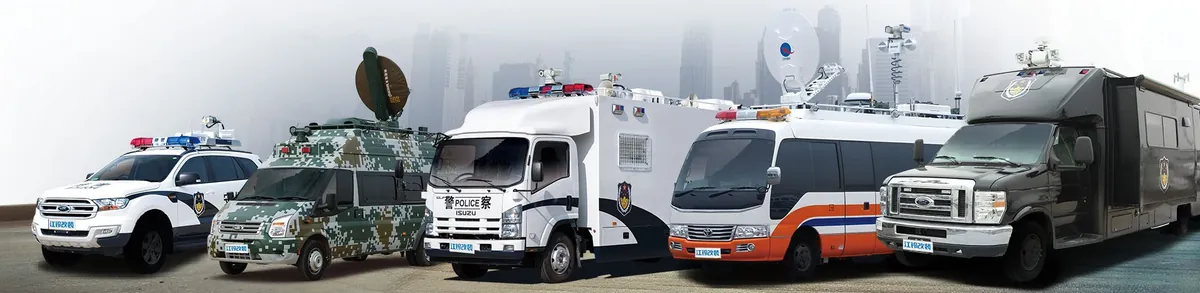
A custom vehicle moves through seven documented steps: needs analysis, feasibility answer with a budget price, design review and drawing approval, contract, build with weekly photo updates, a 21-point inspection you can witness, and shipping with commissioning support. You approve the drawings before production starts, and nothing is built against an unapproved drawing.
| First response | Within one working day |
|---|---|
| Design approval | Drawings signed off before production |
| Progress updates | Weekly photos during build |
| Inspection | 21-point factory inspection, witnessable |
| Minimum order | 1 vehicle |
| Shipping terms | FOB / CIF / DAP / others per contract |
| Documentation | Export docs + inspection record |
| After delivery | Spare parts + technical training |
It starts with your mission profile rather than a catalogue: destination market, crew size, patient volume, road conditions, climate, and the equipment you already own. The export team turns this into a configuration proposal.
Within one working day you receive a feasibility answer and a budget price. If the requirement is not feasible — technically or legally in your market — you are told at this stage, before any money moves.
The engineering team produces layout drawings: interior arrangements, equipment mounts, electrical and pneumatic schematics, weight distribution. You review, comment and approve. Production only starts against an approved drawing.
The final specification, lead time, payment terms and shipping terms are fixed at contract stage, so both sides know exactly what 'done' means.
During the build you receive weekly photo updates showing real progress on your vehicle. The completed unit passes a 21-point factory inspection covering electrical continuity and earthing, oxygen and suction pressure holding, anchorage torque, door and locker operation and other service-critical items.
You may attend the inspection in person or send a third-party agency. The signed inspection record ships with the vehicle.
Export documentation is prepared by the team that does it daily: bill of lading, commercial invoice, packing list, certificate of origin, chassis certificate of conformity and the inspection record.
After arrival, commissioning support and technical training for your crew and workshop staff are available, and spare parts are supplied against the vehicle's build file for years afterwards.
Send five things: destination country, the role the vehicle must perform, crew size, equipment that must be carried…
ProductionWhat is the lead time from order to delivery?Lead time is stated per project rather than per catalogue, because it depends on chassis availability, the complexity…
ProductionWhat happens during design review and drawing approval?Design review turns a requirement into a buildable drawing set. It fixes dimensions, equipment positions, cable…
TechnicalCan you build a vehicle to our own specification rather than a catalogue model?Yes. Every unit is built to order, and a fully custom specification is a normal project rather than an exception. The…
Lead time is stated per project because it depends on chassis availability and conversion complexity. A straightforward conversion on an available chassis is faster than a from-scratch design; you get a firm date at contract stage.
Yes, before production of the affected section starts. Changes are documented as revisions with any cost or lead-time impact agreed in writing.
The export documents are prepared for smooth clearance; you appoint a customs broker at destination. DAP terms can be quoted if you prefer the freight handled to your city.
Report it with photos to the service channel. Warranty items are repaired under the published warranty policy; spare parts are supplied against your vehicle's build file.
Send the mission profile or tender text — feasibility answer within one working day.