Command & Communication

Mobile Command Vehicles That Arrive Connected

AUTOSMODS builds mobile command and communication vehicles to order on off-road (Mengshi M50 / M20), pickup, van (Transit T8, Coaster) and 6x4 heavy-truck chassis. Each vehicle integrates satellite, trunked radio, MESH ad-hoc networking, 4G/5G, shortwave and video conferencing over a dedicated power and cabling system. Bodies range from a 4–7 seat forward command cabin to a double-stage expanding box that seats dozens.

28+years building special vehicles
300+vehicle models in production
220national patents, 12 of them inventions
21quality checks before every delivery

Key facts at a glance

PlatformsMengshi M50 / M20 off-road; Ford F-150; Transit T8; Coaster; 6x4 heavy truck
Body optionsForward command cabin, fixed box, double-stage expanding box
Capacity4–7 seats in a forward command cabin; dozens in an expanding box
CommunicationsSatellite, trunked radio, MESH ad-hoc, 4G/5G, shortwave
AV systemsVideo conferencing, multi-screen display, image capture and relay
Power and cablingDedicated circuits and structured cabling for all comms equipment
Quality gate21-point factory inspection before delivery
Order sizeFrom one unit
PriceQuoted per configuration — request a quotation

A command vehicle fails in one of two ways: it cannot get to the incident, or it gets there and cannot talk to anyone. The first is a chassis decision, the second is a systems-integration decision — and most procurement problems come from treating them separately.

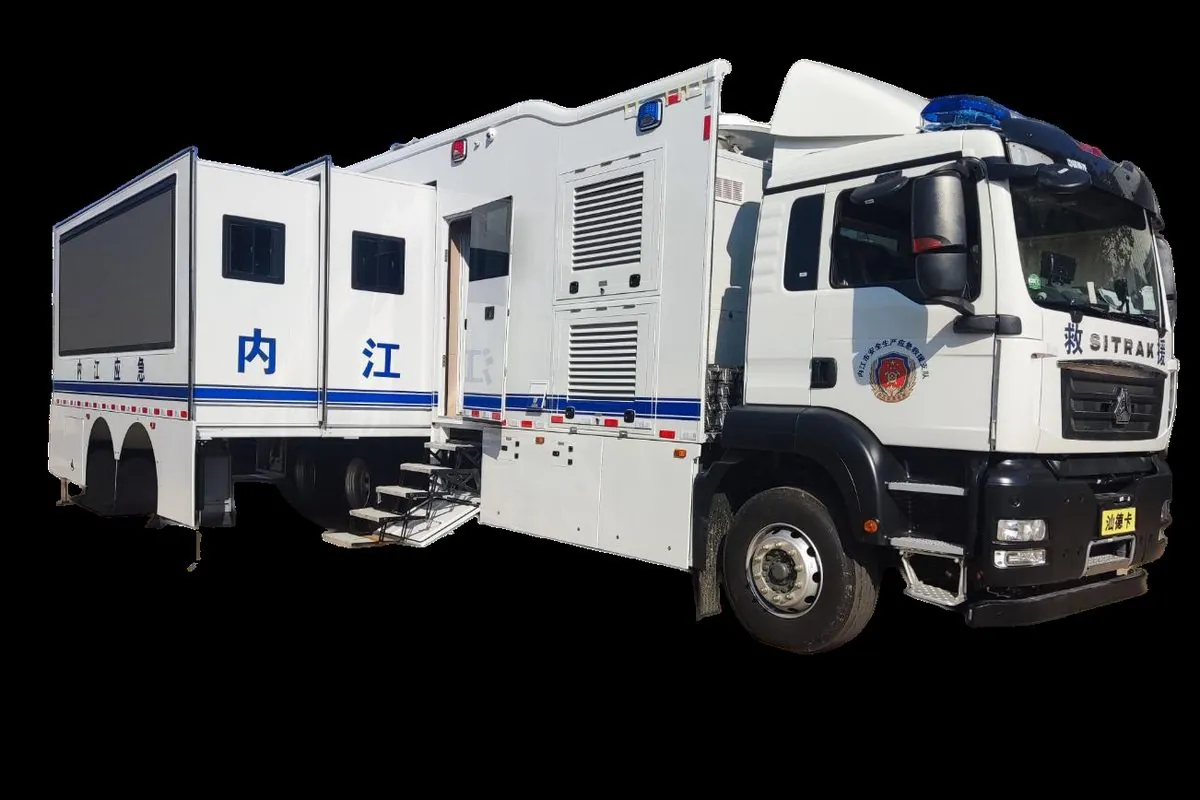
We start from the terrain and the mission duration, then size the body and the communications stack to match. A Mengshi M50 forward command vehicle goes where the road does not, with a communications suite that fits an off-road payload. A 6x4 heavy truck with a double-stage expanding box gives dozens of people a meeting room with satellite, MESH and trunked radio, at the cost of needing a road to reach the site. Both are valid; choosing the wrong one is expensive.

Configurations

Each configuration is a starting point — equipment, layout and finish are set per order.

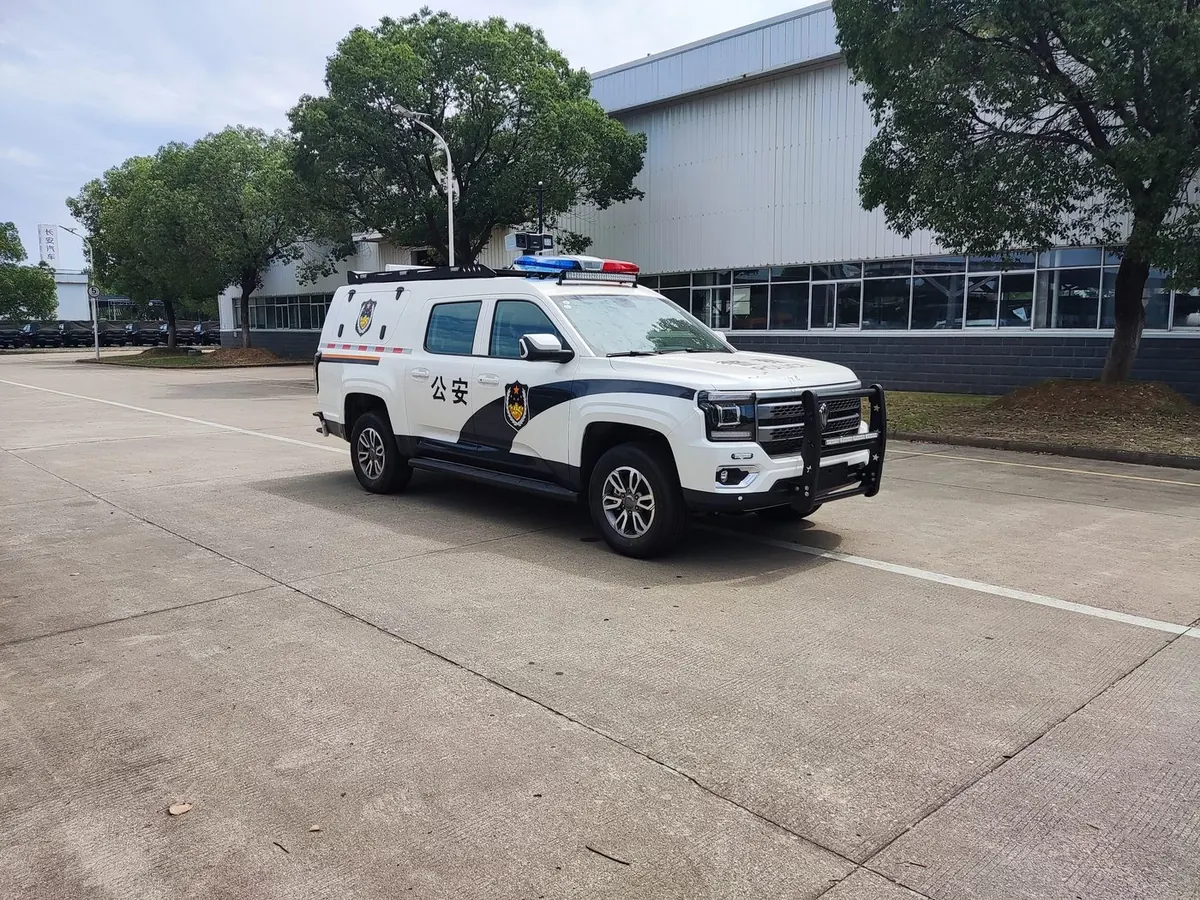
01Forward command vehicle

A Mengshi M50 military-grade off-road chassis with an integrated communication suite — the first link in the emergency communications chain, able to reach a site before any road vehicle.

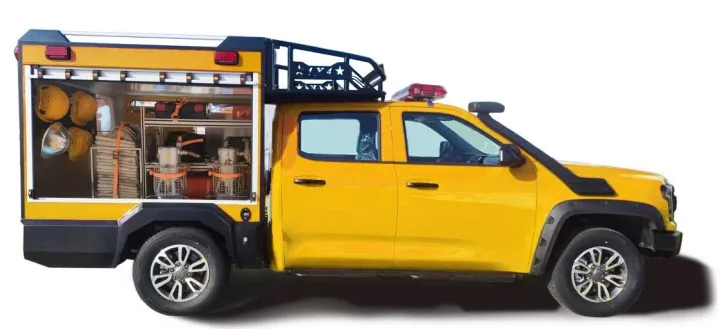
02Rapid-response pickup command

A Ford F-150 based command vehicle (3.5 T, part-time 4WD, 10-speed, 280 kW) with dispatch system and public-address equipment for on-scene control where speed matters more than floor area.

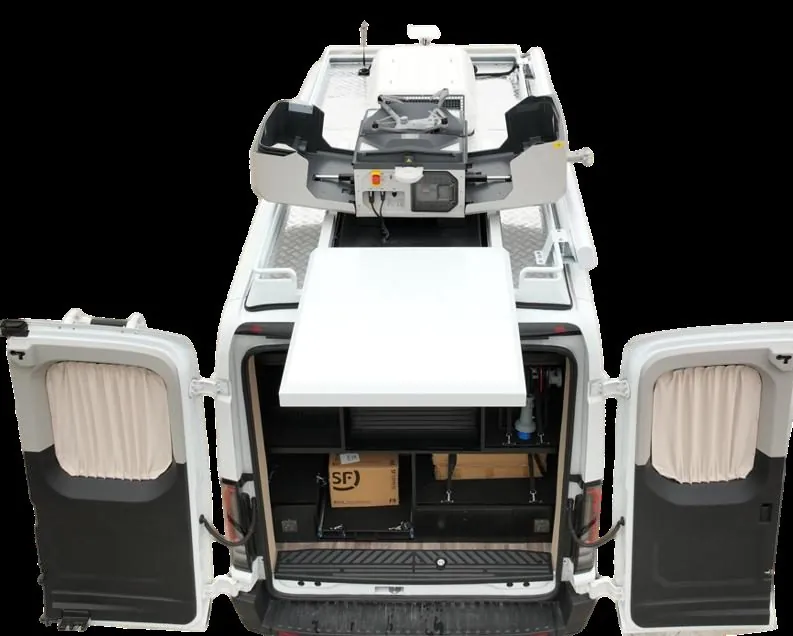
03Box command vehicle

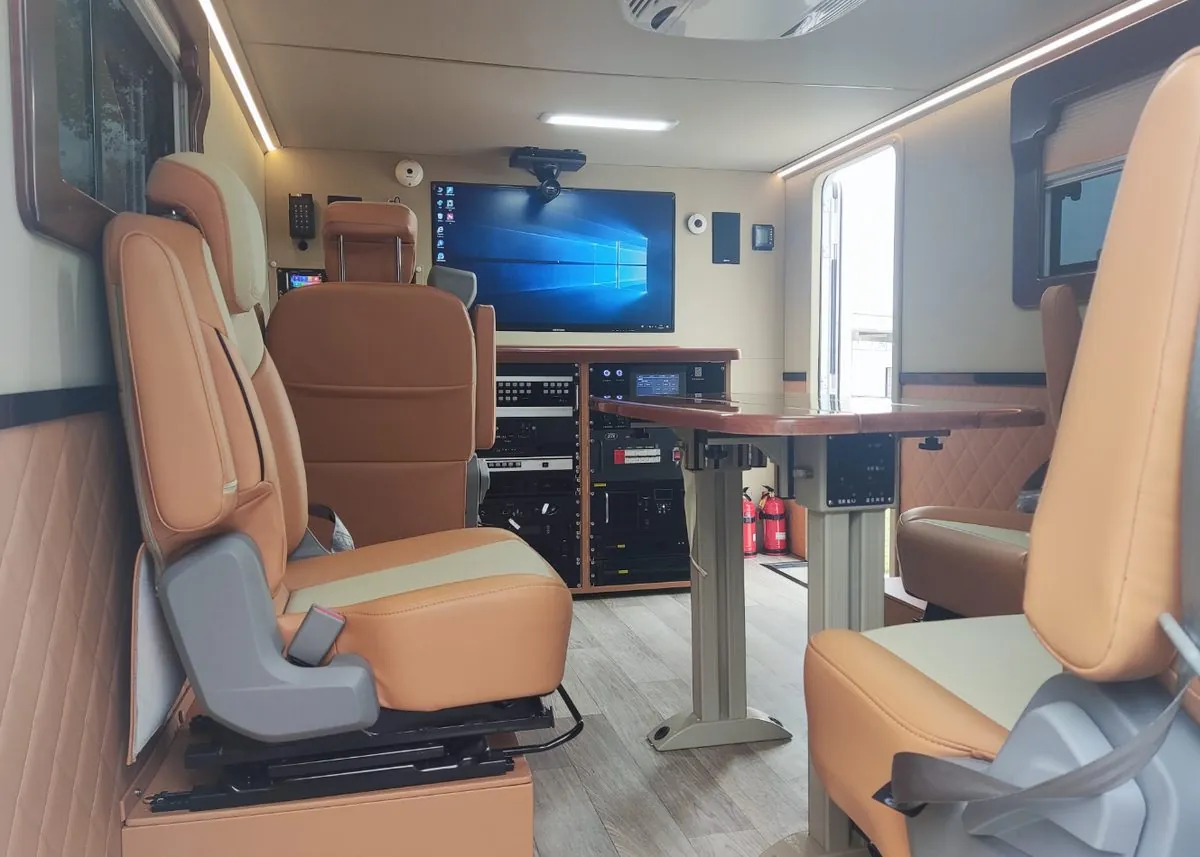
A fixed box body on a van or heavy chassis with satellite, trunked radio, MESH and video conferencing — a working command room for 4–7 people.

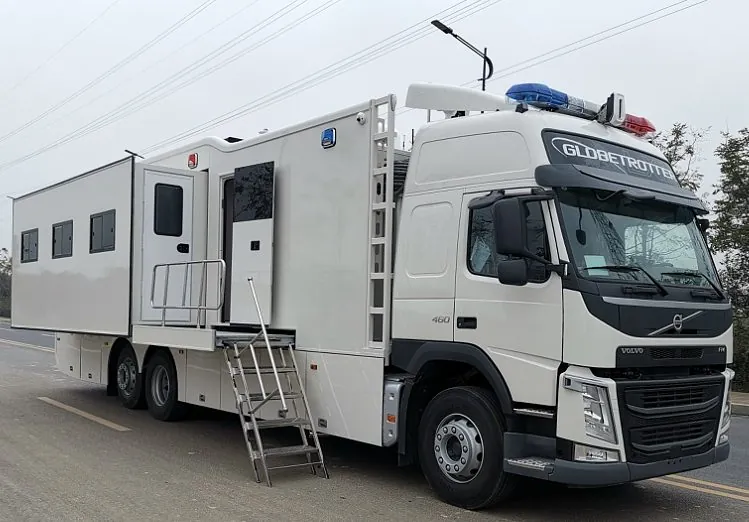
04Double-stage expanding box

A 6x4 heavy-truck chassis with hydraulically expanding cabin, giving dozens of people a conference space with satellite, MESH and trunked radio on site.

Where it is used

The same chassis carries different bodies depending on who operates it and what the duty cycle looks like.

Emergency management

A forward command post at the incident, connected to the rear headquarters by satellite and MESH.

Fire and rescue command

On-scene command for multi-unit operations, where radio interoperability between agencies is the real requirement.

Civil defence and security

Mobile command for civil-defence systems and large-event security, deployed as a fixed post for the duration.

Remote infrastructure response

Power-grid, pipeline and mine incidents where the site has no usable communications infrastructure at all.

Representative models

A selection from this line. Every unit is re-engineered to your specification.

How a build runs

  1. Requirement

    Mission profile, destination market and equipment list

  2. Design

    Layout drawings and a fixed specification

  3. Chassis

    Base vehicle sourced to the agreed configuration

  4. Body build

    Welding, paint and assembly at 195 custom stations

  5. Inspection

    21-point factory check before release

  6. Shipment

    Export documentation and loading

Questions buyers ask

What is the difference between a command vehicle and a communications vehicle?

In practice the terms overlap. We use command vehicle for a mobile decision space — seats, displays, conferencing — and communication vehicle where the primary payload is the radio and satellite link. Most builds include both functions.

Which communication systems can be integrated?

Satellite, trunked radio, MESH ad-hoc networking, 4G/5G public networks, shortwave and video conferencing, plus image capture and relay. The exact stack is specified per order against the networks your agencies actually operate.

How many people can the vehicle seat?

A forward command cabin seats 4–7. A double-stage expanding box on a 6x4 chassis is built for meetings of dozens. Tell us the working group size and we will size the body.

Can it operate independently of the grid?

Yes — the communications and AV equipment runs on dedicated circuits with its own power distribution, so the vehicle does not depend on site power. Autonomy duration is agreed at order stage against your duty cycle.

What is the minimum order quantity?

One unit. Command vehicles are usually single-unit purchases, occasionally paired with a second vehicle for redundancy.

Why is there no price on this page?

The communications payload can cost more than the chassis, and it varies with every agency's network. We price against a defined equipment list instead of publishing a figure that would not hold.
Other product lines

Related questions

Straight answers from our engineering and export teams.

Browse the full knowledge base (42 questions) →

Start with the communication plan

Which networks you operate, how many people need to work on site, and how long the vehicle must run unsupported — that defines the build.

Chat with us