Other models in this line
Every unit is re-engineered to your specification.
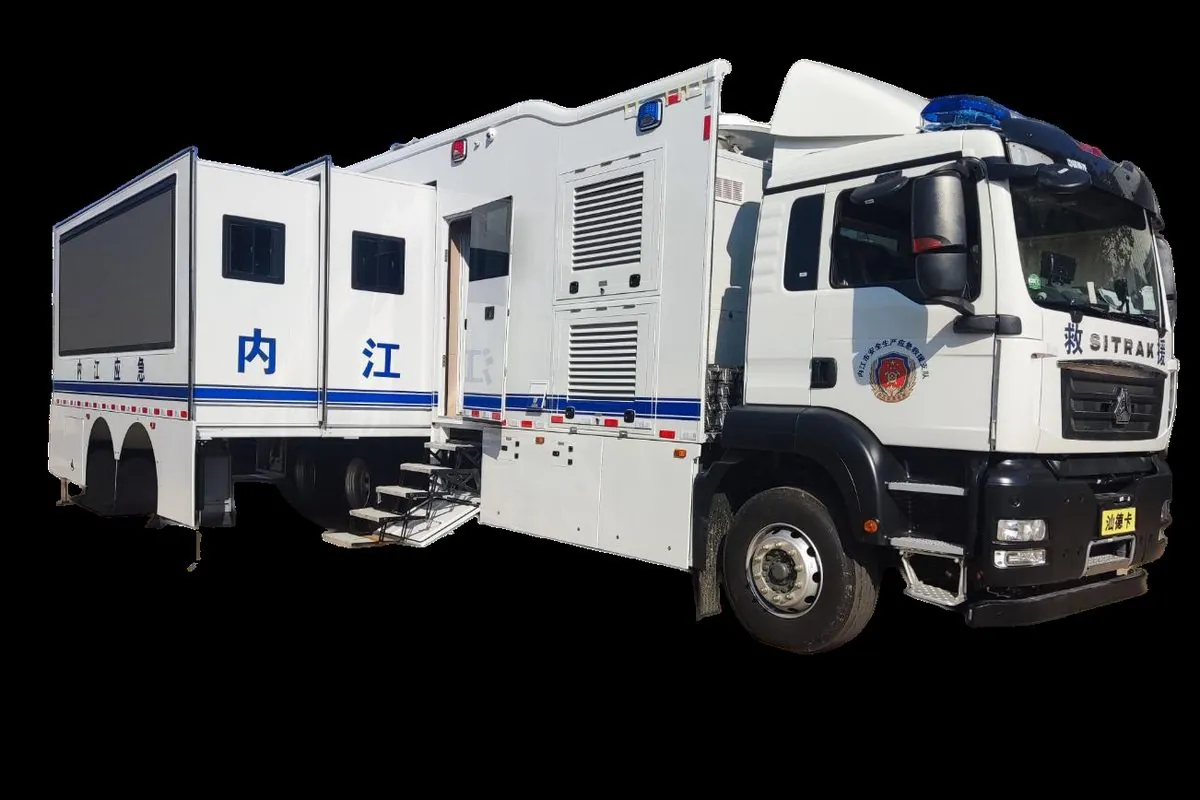
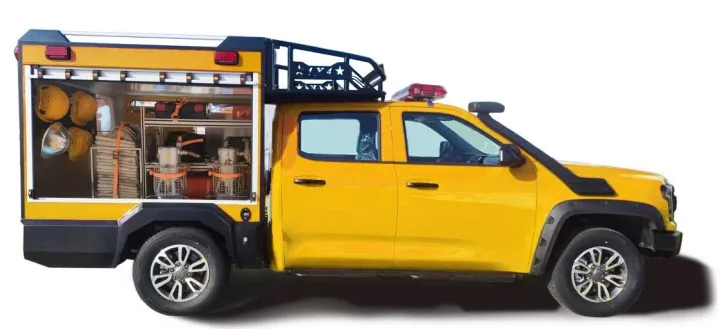
A forward command vehicle on the Mengshi M50 off-road chassis, carrying an integrated communication suite into terrain that stops ordinary vans. It is the first link in the chain: when the road ends and the network is down, this is the vehicle that arrives with a working radio, a working satellite link and a place to plan.
| Base chassis | Mengshi M50 high-mobility off-road chassis |
|---|---|
| Role | Forward command and initial communications node |
| Communications | Radio, satellite and MESH networking integrated in one rack |
| Working space | Two to four operator positions with map board and displays |
| Power | On-board generator with independent auxiliary circuit |
| Delivery | Complete vehicle, configured to your radio and data equipment |
A forward command vehicle is judged by whether it can work when everything else has failed. That means independent power, an antenna system that does not depend on a mast that has to be erected, and a working environment that two or three people can occupy for a full shift in bad weather. Off-road capability is only useful if the communications survive the journey.
The Mengshi chassis is chosen for reach, not for show. It climbs, wades and crosses ground that a commercial van cannot, and the body is mounted to tolerate that movement without cracking equipment racks. Radios are shock-mounted, the antenna farm is sized for the vehicle rather than the brochure, and cable runs are protected against water and vibration.
The interior is a small operations room: operator positions facing displays, a map board that can be written on, lighting that can be dimmed for night work, and heating that works at low ambient temperature. Everything is arranged so that two people can work without standing up.
Each configuration is a starting point — equipment, layout and finish are set per order.
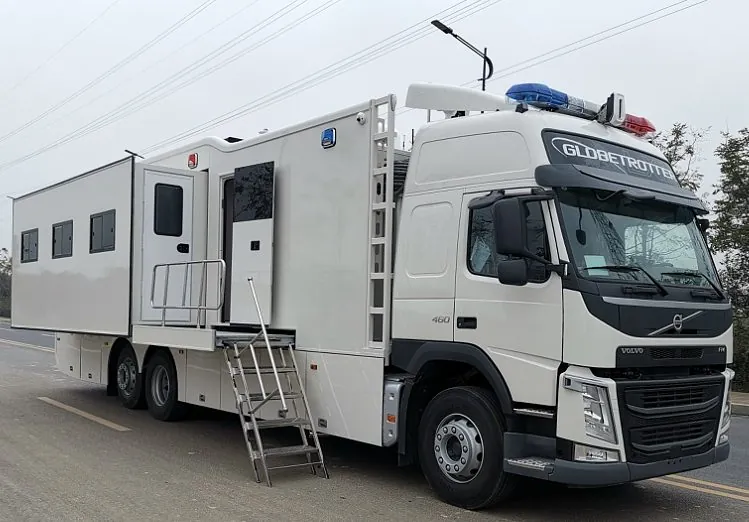
Radio, satellite and MESH in one rack with two operator positions.
Expanded interior with three to four positions, map board and video link to headquarters.
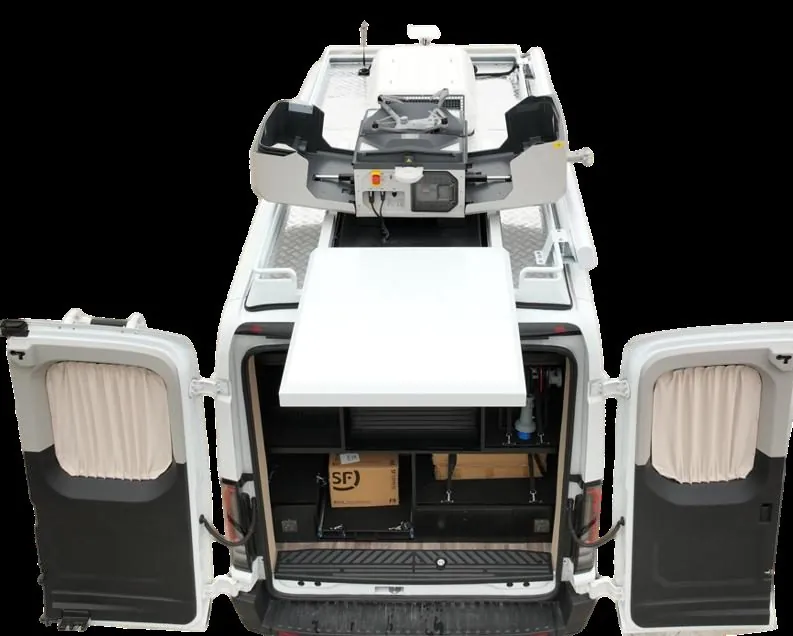
Lightweight fit-out with a single operator position and extended antenna suite.
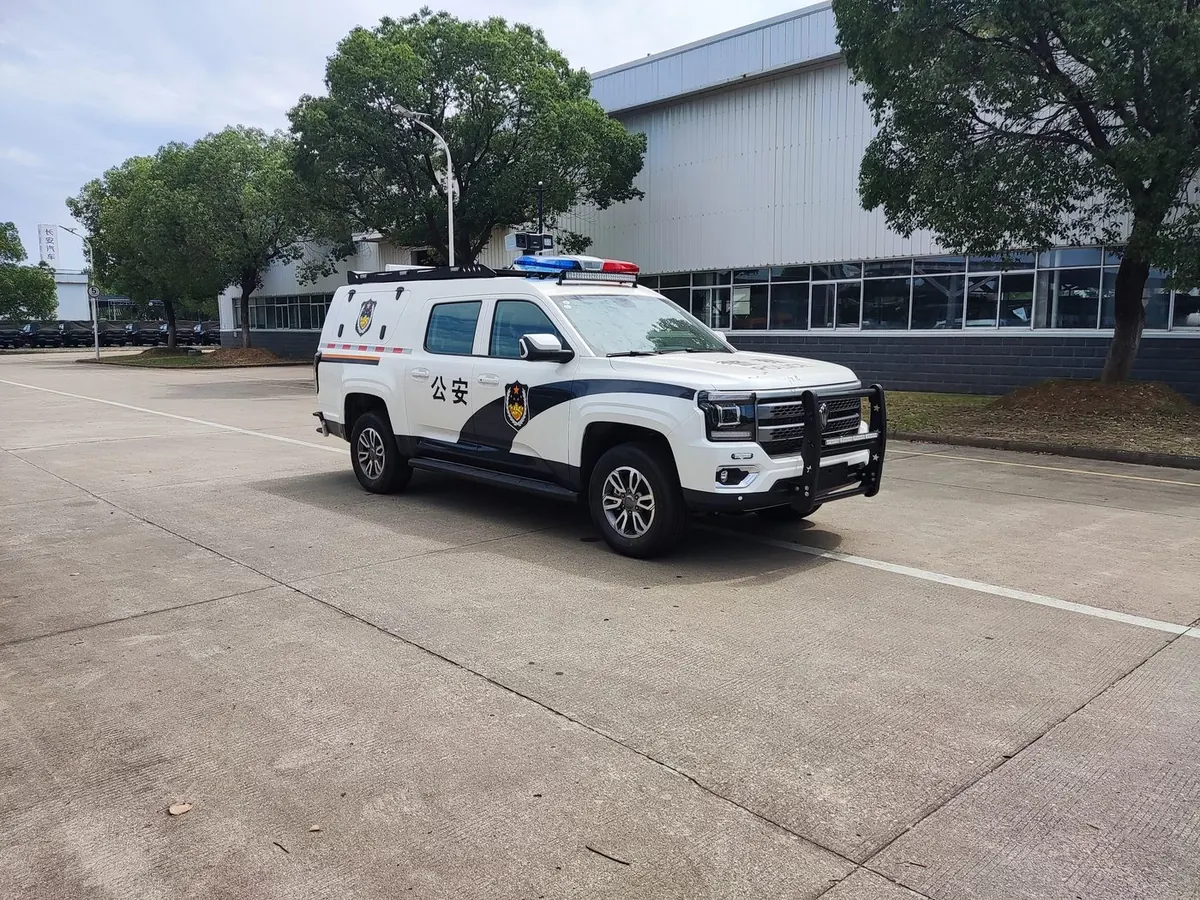
Configured for civil emergency services with interoperable radio for multi-agency working.
The same platform carries different fit-outs depending on who operates it.
Earthquake, flood and wildfire zones where the cellular network has failed.
Areas with no road network and no fixed communications infrastructure.
A forward node that lets police, fire and medical talk to each other on scene.
Every unit is re-engineered to your specification.
That depends on the communication load and the generator or battery configuration, which we size from your mission profile. Send the equipment list and the intended operating period.
Yes. The rack is built around your radio models, with power and antenna connections specified to them. Send the make, model and antenna requirement.
A mast can be specified, but the standard configuration is designed to work from vehicle-mounted antennas so the vehicle can communicate while moving.
Straight answers from our engineering and export teams.
Chassis selection is driven by payload, wheelbase, drive configuration and local service support, not by brand…
TechnicalCan you build a vehicle to our own specification rather than a catalogue model?Yes. Every unit is built to order, and a fully custom specification is a normal project rather than an exception. The…
Shipping & after-salesDo you provide technical training for our crew and workshop staff?Yes, in two forms: operator familiarisation for the crew and technical training for workshop staff. Operator training…
Send the mission profile, the radio equipment and the operating duration. We will propose a rack and power configuration.