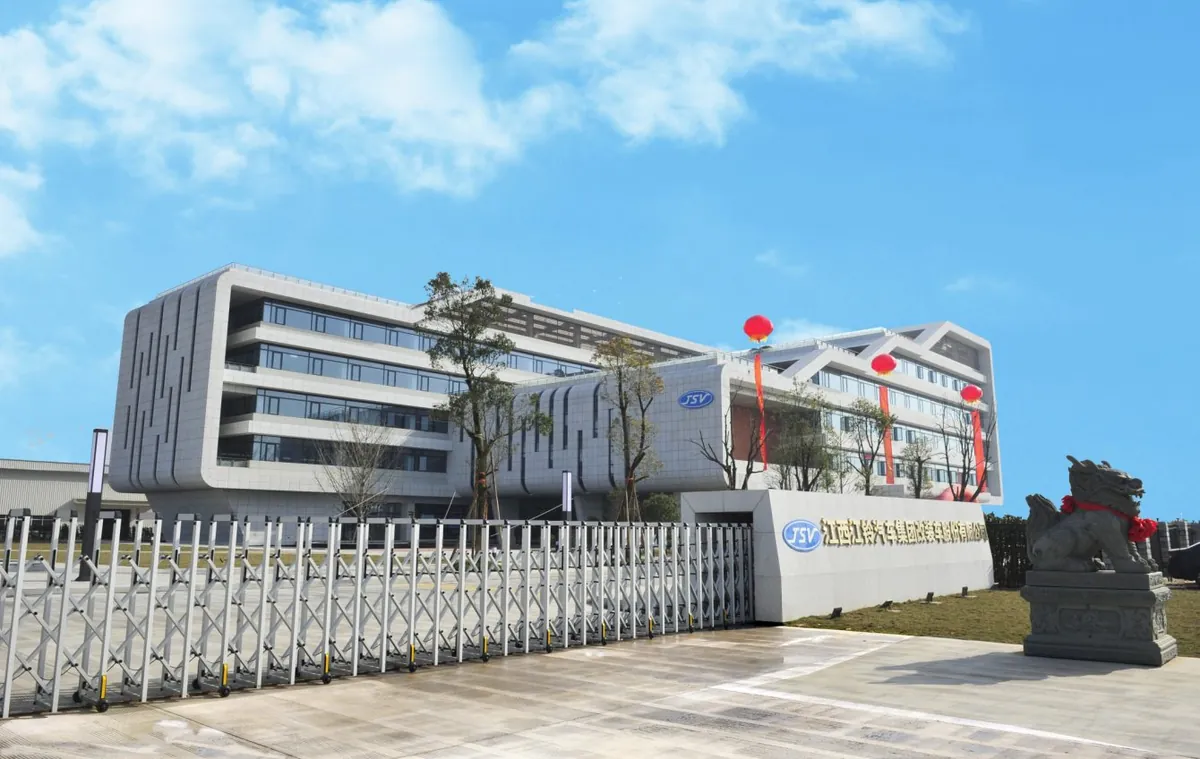
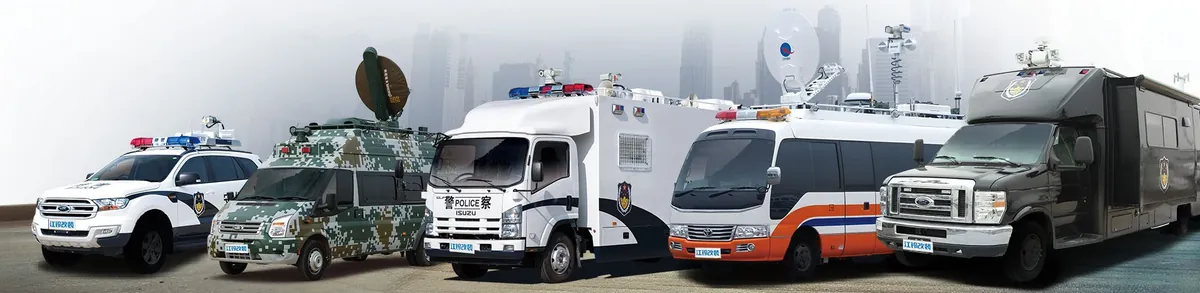
AUTOSMODS builds special vehicles on a flexible, order-driven line: 88 laser welding machines, three painting lines, a 200-metre assembly line with 195 customisation stations, CNC machining and cathodic electrophoresis. Annual capacity exceeds 30,000 vehicles, and every vehicle passes a 21-point inspection before delivery.
| Annual capacity | 30,000+ special vehicles |
|---|---|
| Plant area | 500 mu (approx. 33 hectares) |
| Body welding | 88 laser welding machines |
| Painting | 3 lines, incl. cathodic electrophoresis |
| Assembly | 200 m line, 195 customisation stations |
| Quality control | 21-point factory inspection |
| Patents | 220 national patents (12 invention) |
| Standards work | 3 standards led, 20 participated |
Special vehicles are not repeated products: two ambulances ordered the same week may need different oxygen layouts, different stretchers and different branding. That is why the factory runs a flexible, order-driven production model rather than a fixed product line.
In practice this means the 195 customisation stations on the assembly line can be re-configured per order, and low-volume builds do not queue behind high-volume ones. A single-unit conversion moves through the same process as a fifty-unit fleet, which is why the minimum order is one vehicle.
Body structures are joined on a welding line built around 88 laser welding machines. Laser welding produces narrow, deep, repeatable welds, which matters twice: the body keeps its dimensional accuracy after painting, and welded seams tolerate the vibration loads of ambulance and off-road service.
Weld quality is checked as part of the 21-point inspection, including seam inspection on structural joints.
Coatings are applied on three lines following a grinding, primer, baking, mid-coat, baking and top-coat sequence. Large components additionally pass through the cathodic electrophoresis bath of the host vehicle maker, which deposits an anti-corrosion layer inside cavities that spray painting cannot reach.
For buyers in coastal or tropical markets this is the difference between a vehicle that looks good on delivery and one that still looks good after five monsoon seasons.
Final assembly runs on a 200-metre board-chain line with 195 customisation stations, where medical interiors, communication racks, light bars, pump systems and cargo solutions are integrated per the approved drawing rather than retrofitted afterwards.
Integrating at this stage means cabling, weight distribution and service access are engineered in, not improvised.
Parts are produced on CNC machining centres for dimensional consistency, and body structures are verified with CAE (computer-aided engineering) force analysis before the first unit is welded. The same simulation data supports homologation files in destination markets.
Every vehicle passes a 21-point factory inspection before packing, covering the systems that fail in service rather…
ProductionCan we visit the factory before placing an order?Yes. Buyers and their technical consultants are welcome to visit the production facility, see vehicles in build, and…
TechnicalWhat is the difference between OEM and ODM in special vehicle manufacturing?In OEM the buyer's specification, drawings and brand define the product and the factory builds to them. In ODM the…
ComplianceWhat quality certifications and inspection evidence do you provide?Every vehicle goes through a 21-point factory inspection before delivery, and the completed checklist travels with…
Yes — that is the point of the flexible model. Single units use the same welding, painting, assembly and inspection process as fleet orders, without minimum batch sizes.
Yes. Buyers and their technical consultants can visit, see vehicles in build, and attend pre-delivery inspection. Third-party inspection agencies are also accepted.
Yes, the factory passed the fire truck manufacturing qualification review in 2016, and also holds national high-tech enterprise status.
The 21-point inspection record for your vehicle, weld and dimensional inspection data on request, and participation in 3 led / 20 participated national or industry standards.
Send the mission profile or tender text — feasibility answer within one working day.