Medical line · Box-type ambulance

Transit T8 Ambulance (V363)

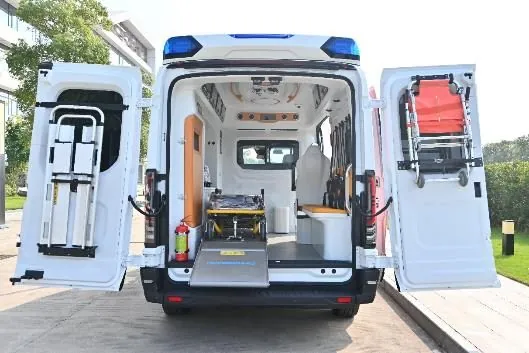
A box-type emergency ambulance built on the Ford Transit T8 (V363) chassis. Three interior layouts — transport, monitoring and intensive care — share one body shell, so a fleet can mix capability without mixing spare parts. Oxygen, suction, inverter and climate systems are integrated at build, not added afterwards.

Key facts

Base chassisFord Transit T8 (V363), front-wheel drive, petrol or diesel
Body constructionWelded steel frame with composite sandwich panels, insulated and sealed
LayoutsTransport, monitoring, intensive care — same shell, different fit-out
Crew and patientsDriver, one or two medics, one or two patients depending on layout
On-board systemsOxygen circuit, vacuum suction, inverter, interior lighting, cabin climate
DeliveryComplete vehicle (CBU) or body-in-white kits for local assembly (SKD)

The V363 body is the workhorse of our medical line. It is a full box conversion rather than a van with equipment bolted in: the roof is raised, the floor is flattened and reinforced for stretcher loading, and the side walls are built as a sealed sandwich so the patient compartment holds temperature and stays cleanable. That structure is what makes a monitoring or intensive-care fit-out possible in the first place.

Because the shell is common across all three layouts, fleets buy one spare-parts catalogue. A transport unit can be upgraded to monitoring specification later by adding the electrical and gas circuits that were designed into the harness from the start. Interior modules — stretcher bench, attendant seat, cabinet wall, oxygen cabinet — are removable panels, so a deep clean or a change of role does not require cutting the body.

Electrical architecture is the part buyers underestimate. Warning lights, siren, work lights, suction, inverter and climate all draw from the same management block, with a separate auxiliary battery and a shore-power inlet. Loads are calculated before the harness is made, so adding a defibrillator or a second infusion pump does not overload a circuit.
Configurations

Each configuration is a starting point — equipment, layout and finish are set per order.

01Transport layout

Stretcher, two attendant seats, oxygen and suction. The standard emergency-transfer specification for municipal and private EMS operators.

02Monitoring layout

Adds a monitor bracket, infusion pole, medical cabinet and 220 V inverter circuit for inter-facility transfers with a nurse on board.

03Intensive-care layout

Ventilator, multi-parameter monitor, syringe pumps, larger oxygen reserve and a dedicated power circuit with UPS backup.

04Negative-pressure option

Sealed partition, HEPA extraction and pressure monitoring added to any layout for infectious-patient transport.

Where it is used

The same platform carries different fit-outs depending on who operates it.

Municipal emergency medical services

High-call-volume fleets that need a proven box ambulance with predictable maintenance.

Hospital-based transfer teams

Inter-facility moves where the cabin must support monitoring equipment and a nurse throughout the journey.

Private ambulance operators

Operators buying in small batches who need the same body shell across a mixed fleet.

Other models in this line

Every unit is re-engineered to your specification.

Related product lines

Questions buyers ask

Is the ambulance delivered as a complete vehicle or as a kit?

Both. Most buyers take the complete vehicle (CBU) with export documentation. Buyers with local body-building capacity can take body-in-white kits and a documented assembly sequence (SKD).

Can we specify our own stretcher and equipment brands?

Yes. The interior is built around the equipment list you confirm at contract stage. Mounting points, electrical outlets and gas outlets are placed to your stretcher model rather than to a generic standard.

What medical standards does it meet?

The body and medical fit-out follow the QC/T 457 ambulance standard, which our engineering team helped author. Final compliance for your market is confirmed against local registration and medical-device rules before the specification is frozen.

How long does a build take?

Lead time depends on chassis availability and layout complexity, and is fixed in the contract. Chassis sourcing is usually the longest single item, so the earlier the base vehicle is confirmed the earlier the build can be scheduled.

Related questions

Straight answers from our engineering and export teams.

Browse the full knowledge base (42 questions) →

Specify your next ambulance

Send the duty profile, the equipment list and the destination market. We reply with a layout proposal and a quotation within one working day.

Chat with us