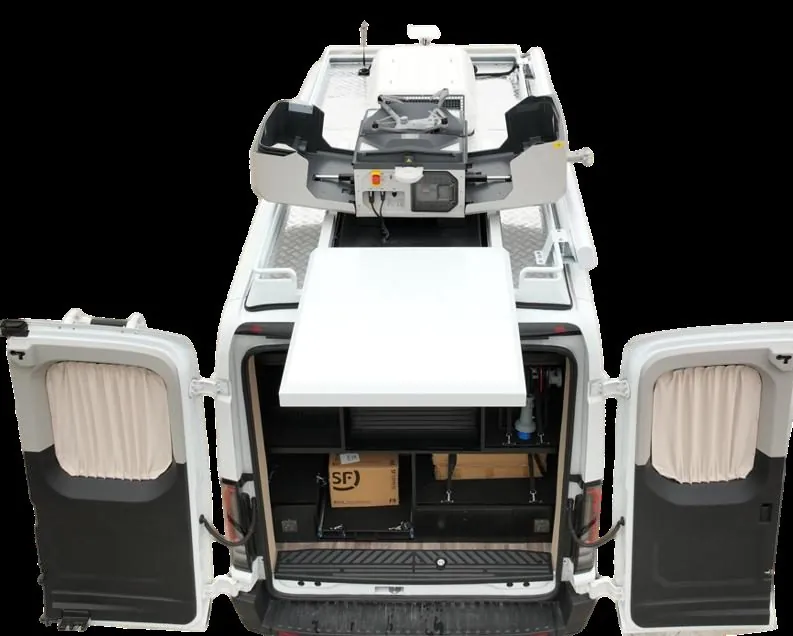
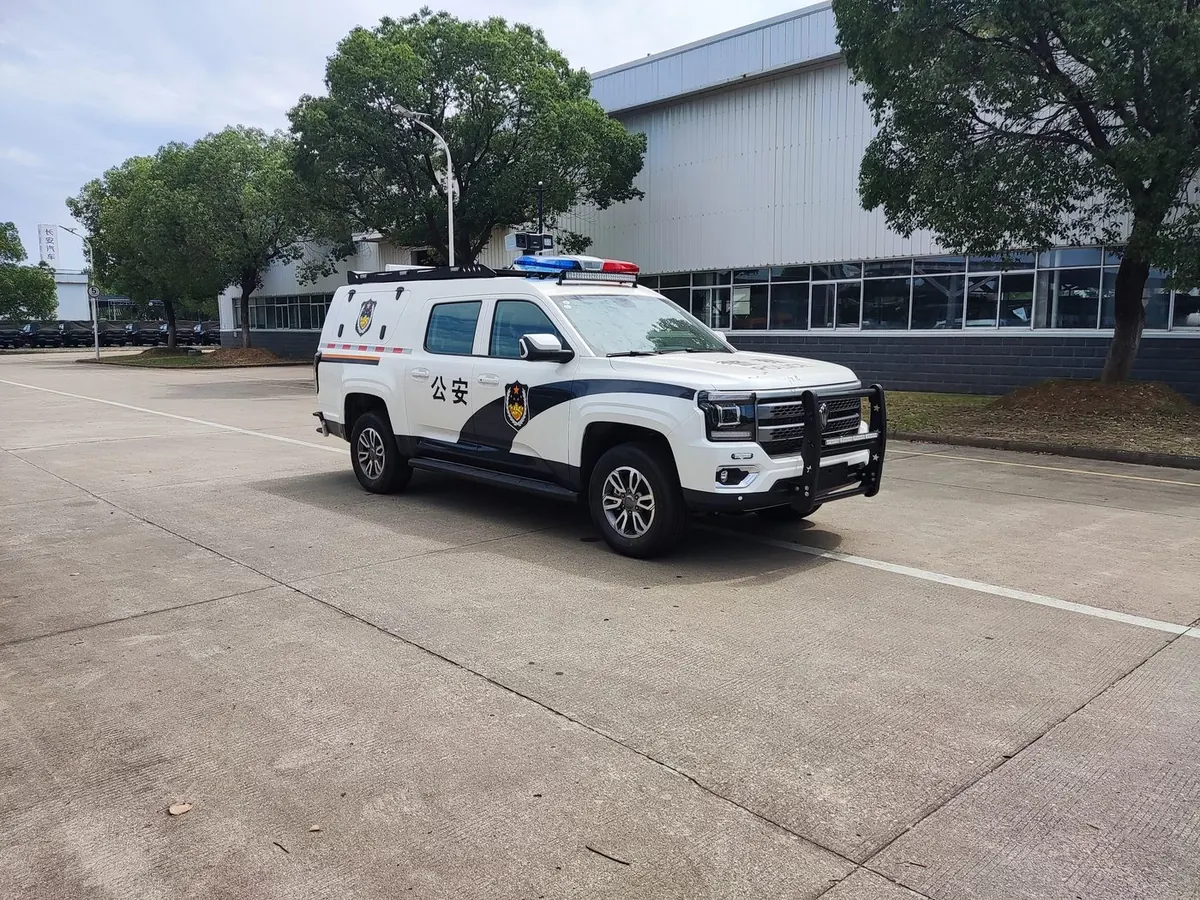
A first-response fire truck built on a heavy-duty 4x4 pickup chassis, carrying equipment and a small water reserve rather than a full tanker load. It gets to incidents that a municipal pumper cannot reach: forest edges, farmland, construction sites, narrow lanes and flooded underpasses.
| Base chassis | Heavy-duty 4x4 pickup with high and low range |
|---|---|
| Body | Equipment compartment body behind the cab with lockable roller shutters |
| Water | Small integrated tank and pump set sized to your first-response requirement |
| Protection | Wading kit, underbody protection and raised intake for off-road access |
| Equipment | Hose, branches, hand tools, rescue equipment in configurable compartments |
| Delivery | Complete vehicle or body kit for local assembly |
Most fire services buy pumpers for the incidents they see most, and then discover that the incidents which cost the most — a field fire, a site fire, a vehicle fire on an unpaved road — happen where the pumper cannot go. A 4x4 pickup-based equipment truck does not replace the pumper. It arrives first, holds the incident, and tells the pumper where to stage.
The body is an equipment body, not a tanker. Compartments are sized around the tools a first-response crew actually carries, with roller shutters that open fully so a hose can be pulled without unpacking the compartment. A small integrated tank and pump provide the first few minutes of water, enough to knock down a vehicle fire or wet a firebreak before the main appliance arrives.
Off-road capability is specified rather than implied: wading kit for flooded underpasses, underbody protection for tracks, raised air intake and tyres selected for the surface the brigade actually operates on.
Each configuration is a starting point — equipment, layout and finish are set per order.
Compartment body with hose, branches, hand tools and a small water tank.
Adds a skid unit, forestry hose and a pump-and-roll capability for vegetation fires.
Configured with hydraulic rescue tools, cribbing and lighting for vehicle extrication.
Combined equipment and water layout for settlements bordering vegetation.
The same platform carries different fit-outs depending on who operates it.
Districts where the first appliance must handle both structure and vegetation fires.
On-site response on unpaved access roads before municipal arrival.
Initial attack on vegetation fires where access is a track, not a road.
Every unit is re-engineered to your specification.
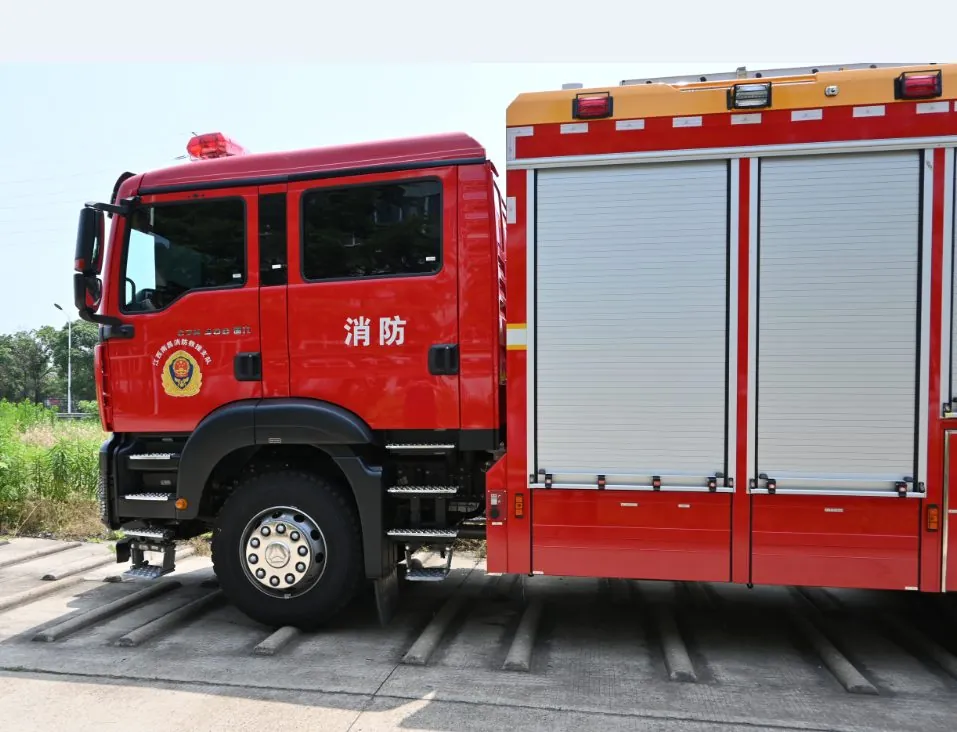
JMC light-truck water tanker with pump, monitor and standard compartments for municipal and industrial fire brigades.
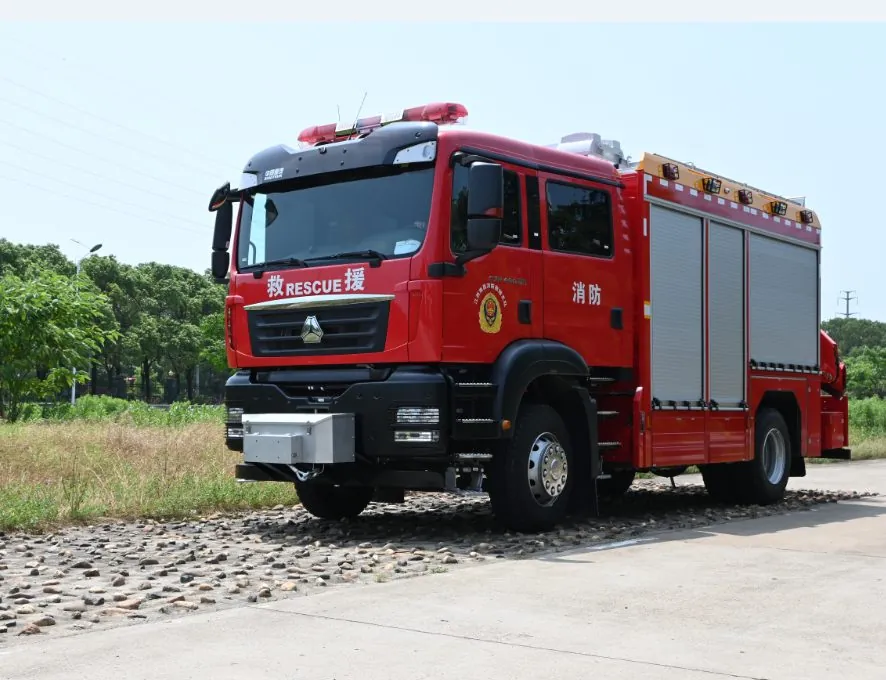
High-capacity tanker on a heavy-truck chassis for industrial estates, airports and long-distance water shuttle operations.
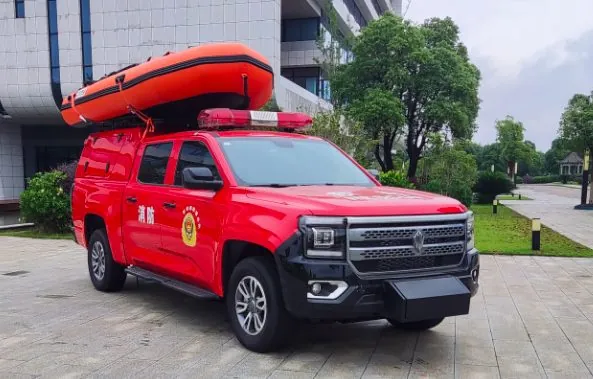
Warning, lighting, power distribution, communication and equipment storage integrated on a pickup base — for township fire stations and first response.
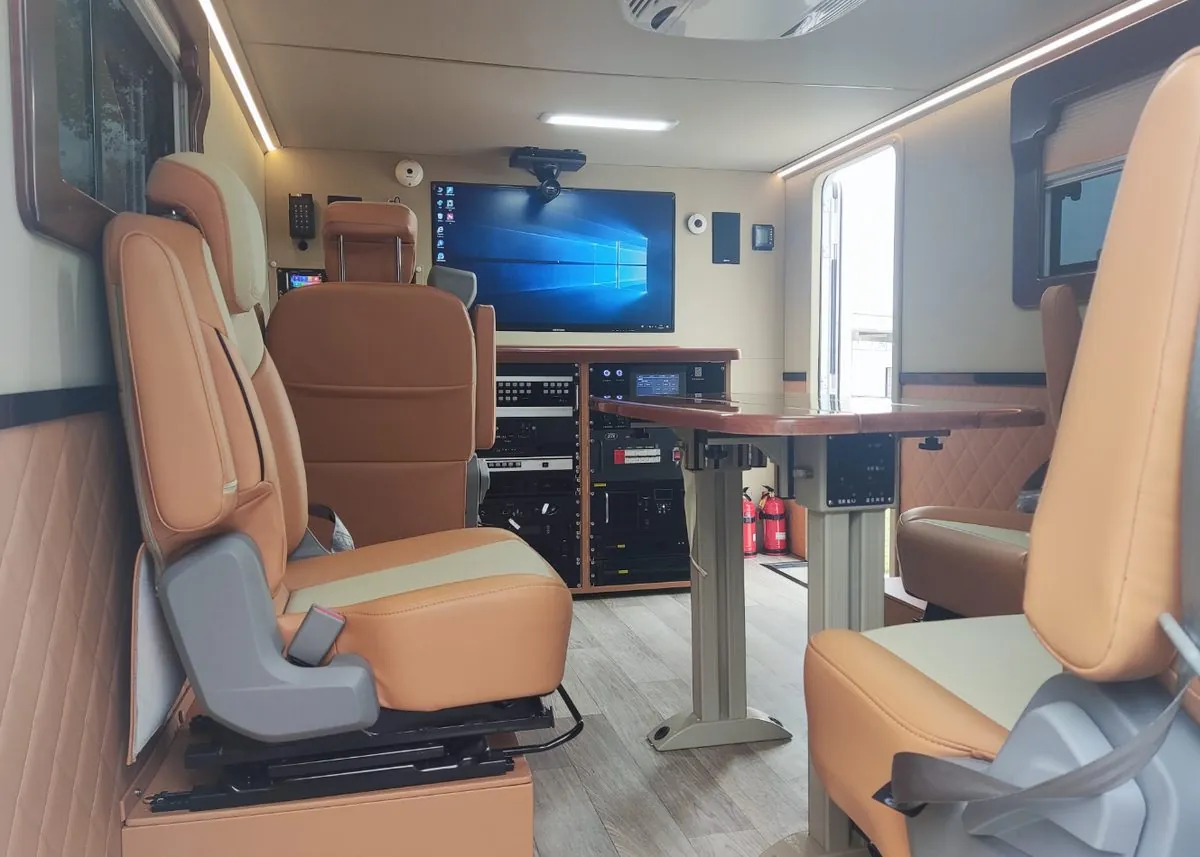
Tank size is specified to your first-response requirement and to the payload the chassis can carry legally. We will not quote a tank that makes the vehicle overweight when full.
A suction and pump set can be specified for drafting from ponds, canals and tanks, subject to the pump selected.
No. It is a first-response and access vehicle. It complements a pumper by reaching the incident earlier and holding it until the larger appliance arrives.
Straight answers from our engineering and export teams.
A fire truck is built around a pump, a water tank and a hose layout, with the equipment specified to the fire…
GCC & Middle EastWhat fire-truck specifications matter for high-temperature Gulf operation?In sustained heat above 45 degrees Celsius the three failure points are pump overheating, crew-compartment air…
AfricaWhich fire-truck configuration suits African municipal and industrial service?Road quality, water supply and crew size decide the configuration more than budget does. Where hydrants are sparse…
Tell us the terrain, the typical incident type and the water volume you need in the first five minutes.