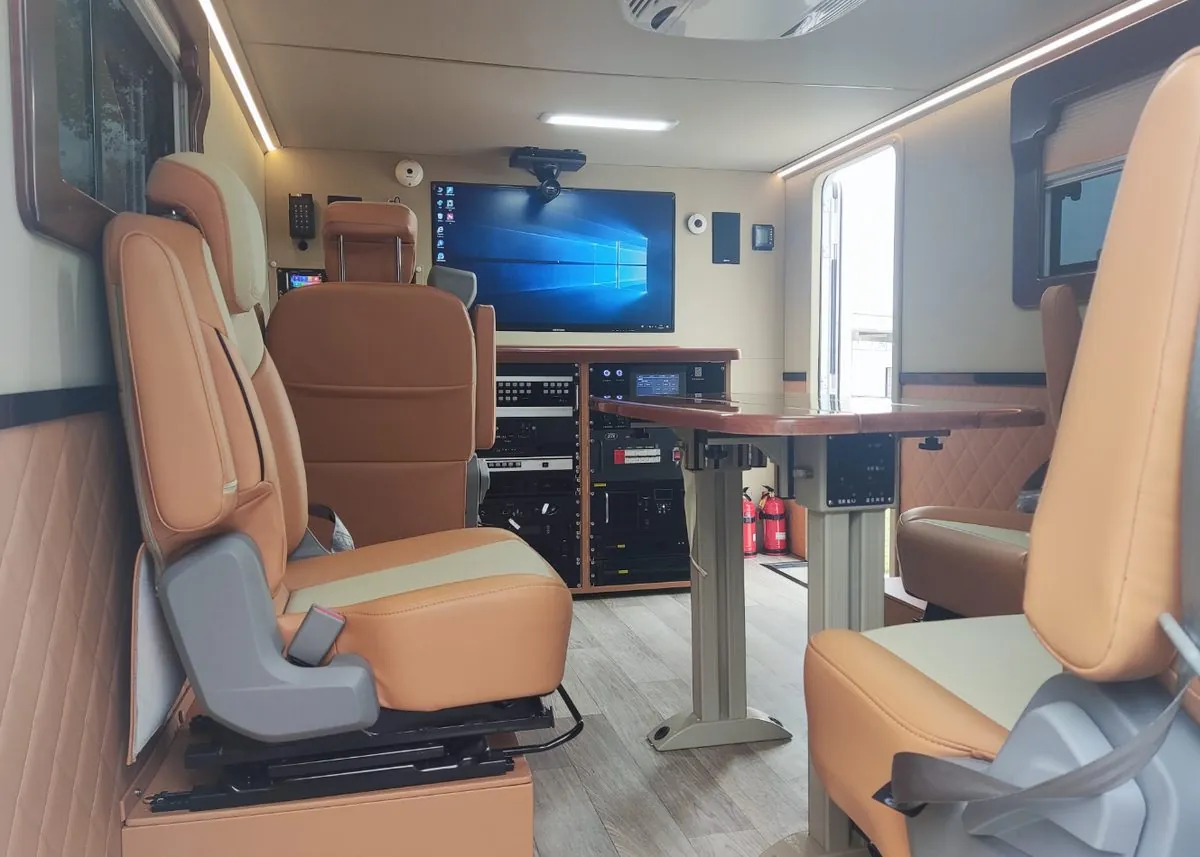
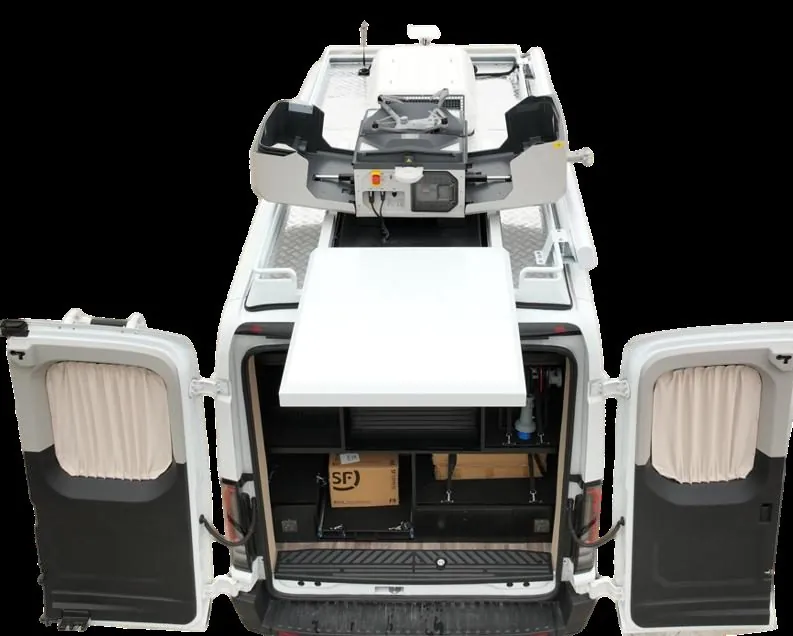
A public-order police vehicle that integrates seven systems into one platform: warning, lighting, surveillance, protection, public address, communication and dispersal. It is built for units that must arrive at a crowd situation, see it, be heard, and hold a position — with equipment that works together instead of seven separate installations.
| Base chassis | Ford Transit or equivalent light commercial chassis, long wheelbase |
|---|---|
| Systems | Warning, scene lighting, surveillance, protection, public address, communication, dispersal |
| Protection | Mesh or polycarbonate window protection, front protection bar, underbody shielding |
| Scene lighting | Mast-mounted floodlights with independent control from the cabin |
| Crew | Seated squad with equipment stowage for shields and personal protection |
| Delivery | Complete vehicle, converted to your unit's equipment list |
A crowd-management deployment fails on coordination long before it fails on equipment. If the floodlights are on one switch, the loudhailer on a handheld unit, the camera on a separate recorder and the radio on the officer's shoulder, the crew is operating four systems instead of one vehicle. The PTU vehicle exists to make those systems answer to the same console.
The conversion starts with the console. Lighting, public address, camera control and radio are laid out for the officer who actually uses them, with the controls reachable from a seated position and the displays visible without turning. Power for the floodlights and the dispersal pump comes from an auxiliary circuit with its own management, so a long deployment does not drain the vehicle battery.
Protection is designed for the job the vehicle is doing. Window protection is mesh or polycarbonate depending on the threat assessment, the front bar protects the cooling pack rather than the bumper, and the underbody is shielded against debris. None of it is intended to make the vehicle a fighting vehicle — it is intended to let a squad hold a position without being put out of service.
Each configuration is a starting point — equipment, layout and finish are set per order.
Warning, scene lighting, public address and radio console with window protection.
Adds roof camera, DVR and a live link to the command centre for evidential recording.
Water or OC dispersal provision with a dedicated pump circuit and cabin-controlled operation.
Reconfigured interior as a forward control point with map board, radio bank and video wall.
The same platform carries different fit-outs depending on who operates it.
Public-order deployments where the vehicle is both transport and forward platform.
Stadiums, festivals and demonstrations where sightlines and public address matter more than speed.
Long-duration presence where the crew must stay in the vehicle for hours.
Every unit is re-engineered to your specification.
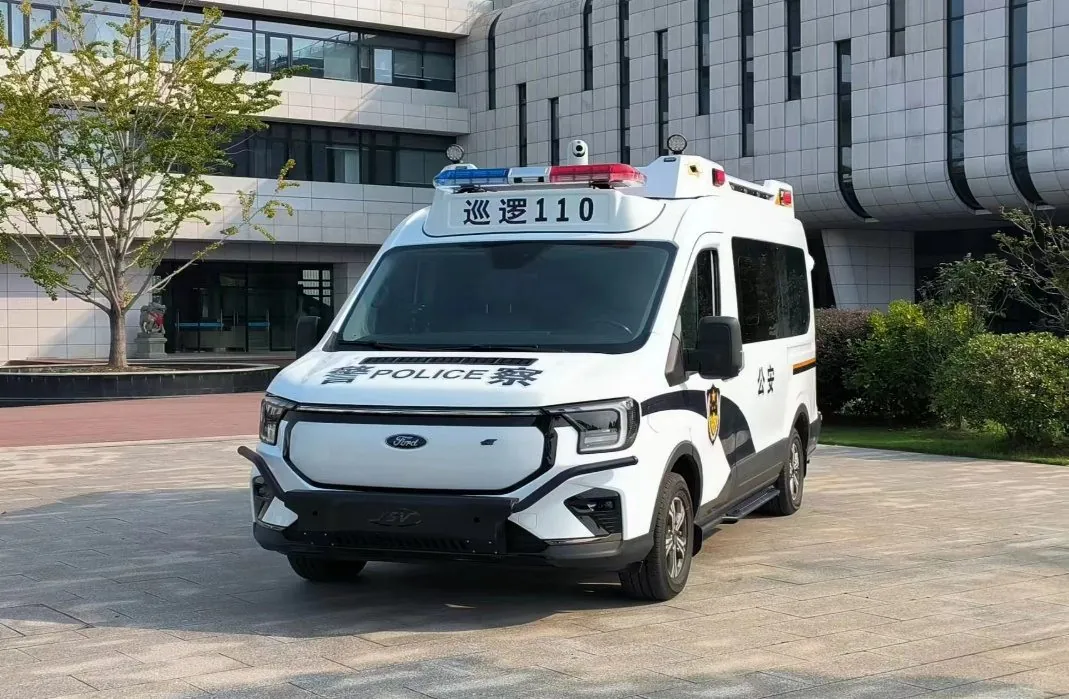
All-electric patrol vehicle with warning, lighting, monitoring and communication systems integrated with the OEM electrical architecture.
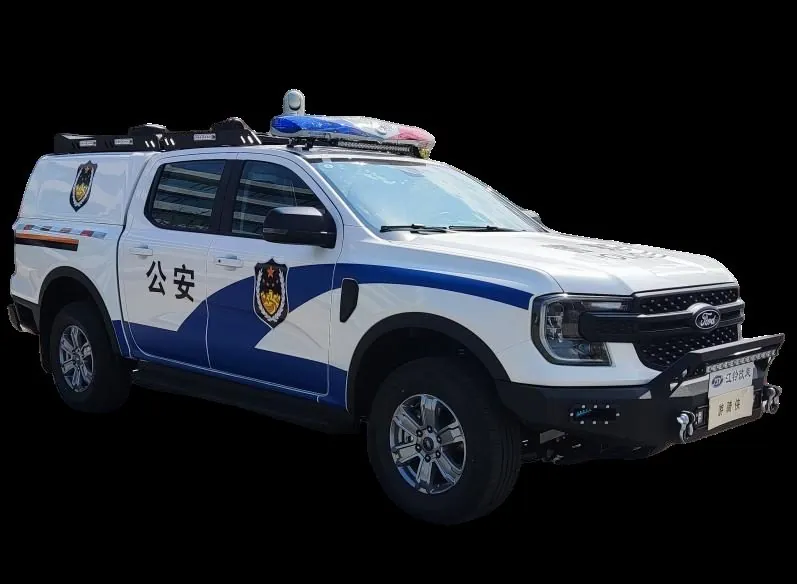
B-level bulletproof protection for 10 crew on a high-mobility off-road chassis. Built for counter-terrorism, deterrence and SWAT assault.
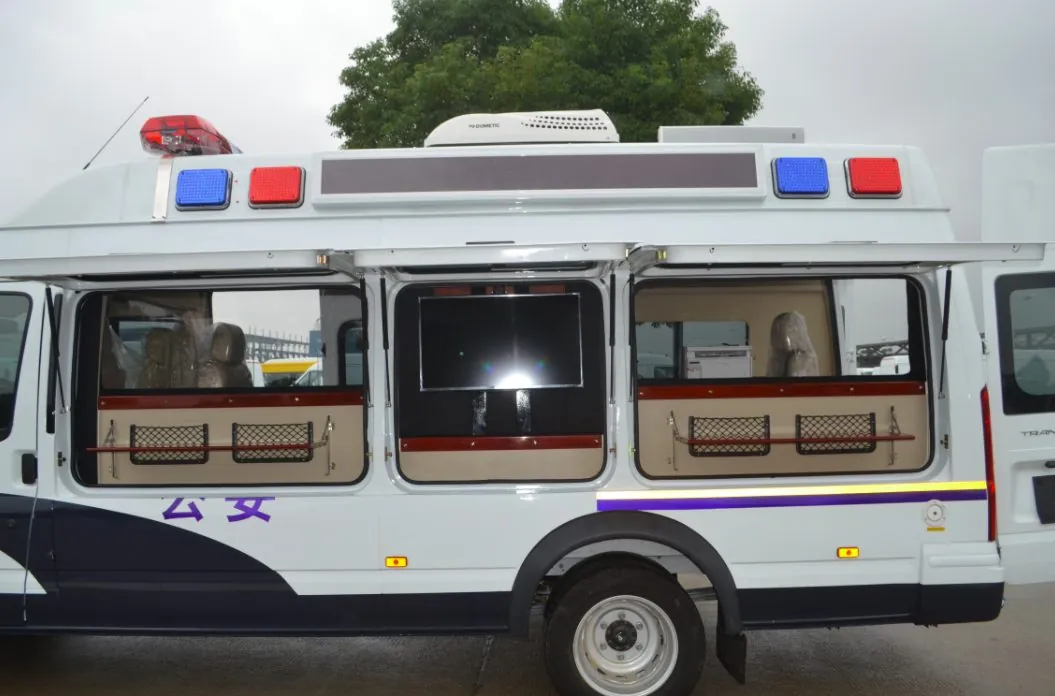
Self-contained station for traffic services, patrol control, emergency call handling and community service in high-density areas.
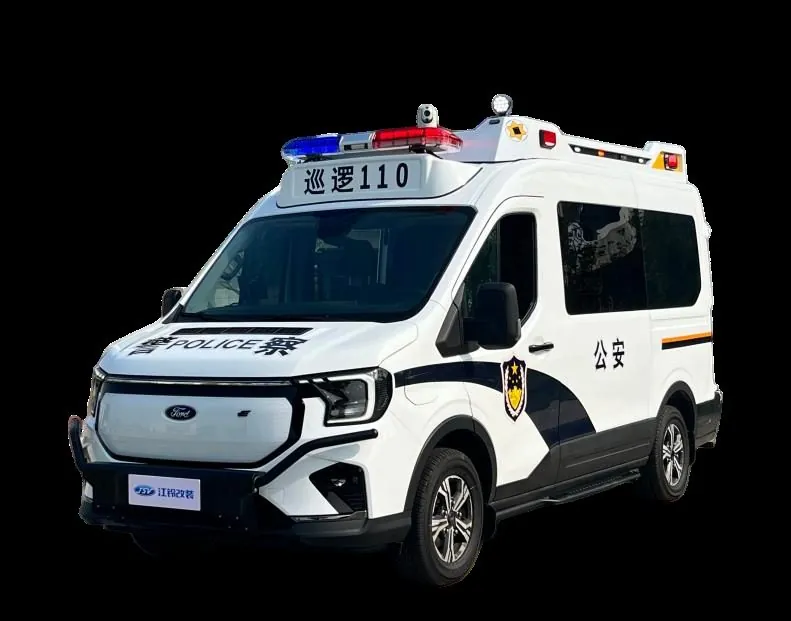
Crew transport and rapid-deployment van for armed police, SWAT and county-level public-order detachments.
No. Dispersal provision is a configured option, and in many markets it requires separate authorisation. State the requirement openly at specification stage so the correct documentation can be prepared.
It can, but it is a heavy conversion and fuel consumption reflects that. Most units keep it as a specialist asset and use standard patrol vehicles for daily work.
Floodlights, public address and dispersal draw from an auxiliary circuit with independent management and its own battery bank, charged from the vehicle while running. The engine battery is isolated from these loads.
Yes. Send the make, model and power draw and the console will be built around them rather than requiring you to replace existing equipment.
Straight answers from our engineering and export teams.
Armoring is specified against a standard, not a marketing word. Common references are the CEN 1063 levels (B4 to B7)…
ComplianceCan the vehicle be registered and homologated in my country?In most markets a converted special vehicle is registered as a modification of a type-approved chassis rather than as…
TechnicalCan you build a vehicle to our own specification rather than a catalogue model?Yes. Every unit is built to order, and a fully custom specification is a normal project rather than an exception. The…
Send the unit's role, the equipment list and the deployment profile. We will propose a console layout and confirm the electrical budget.