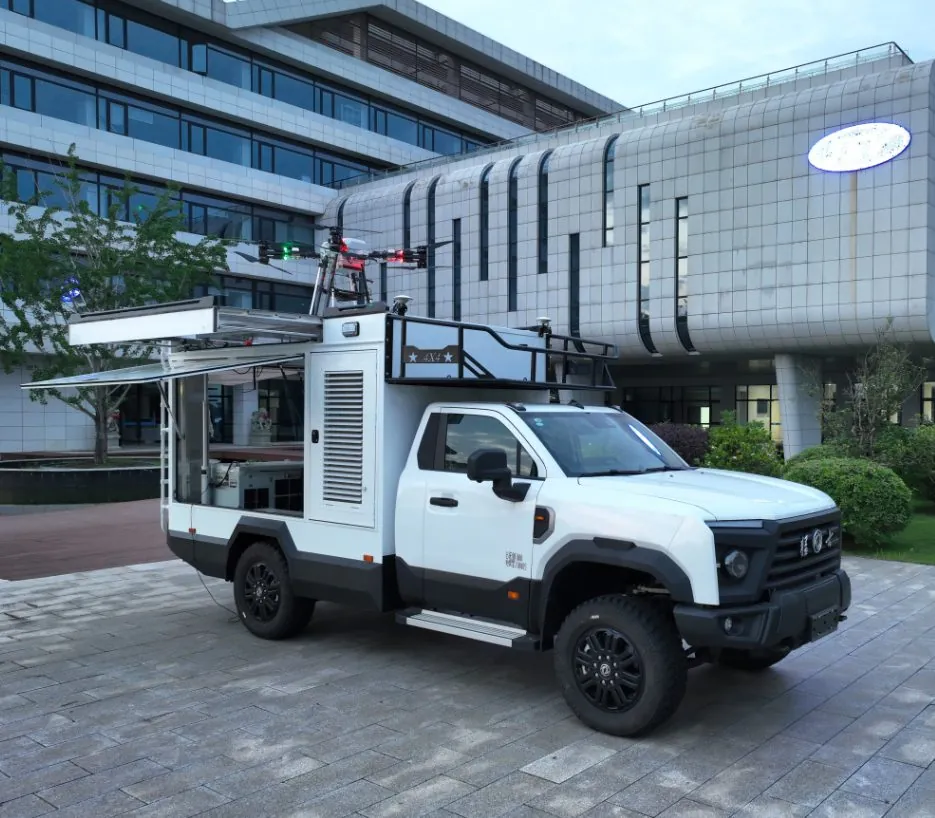
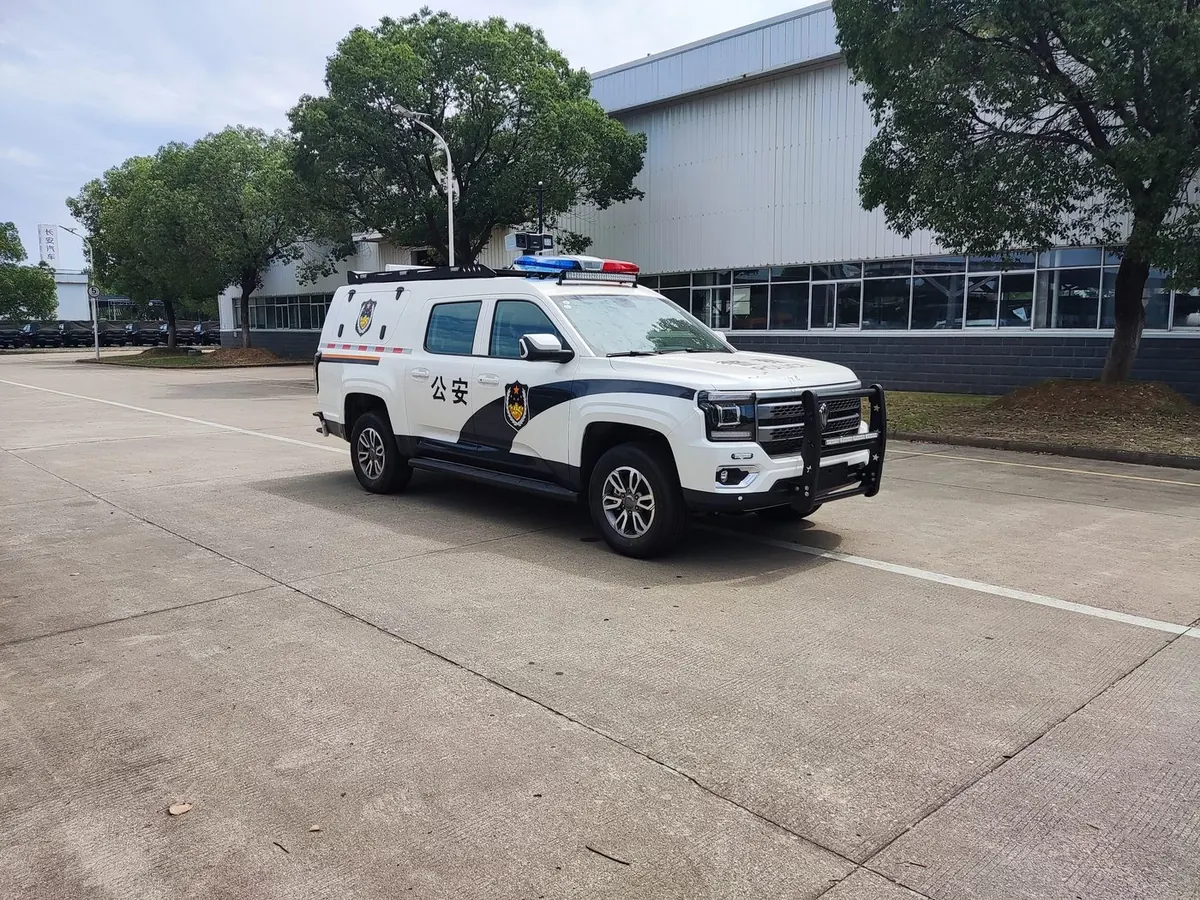
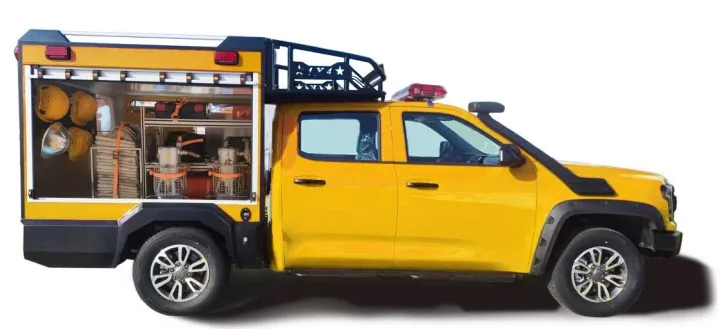
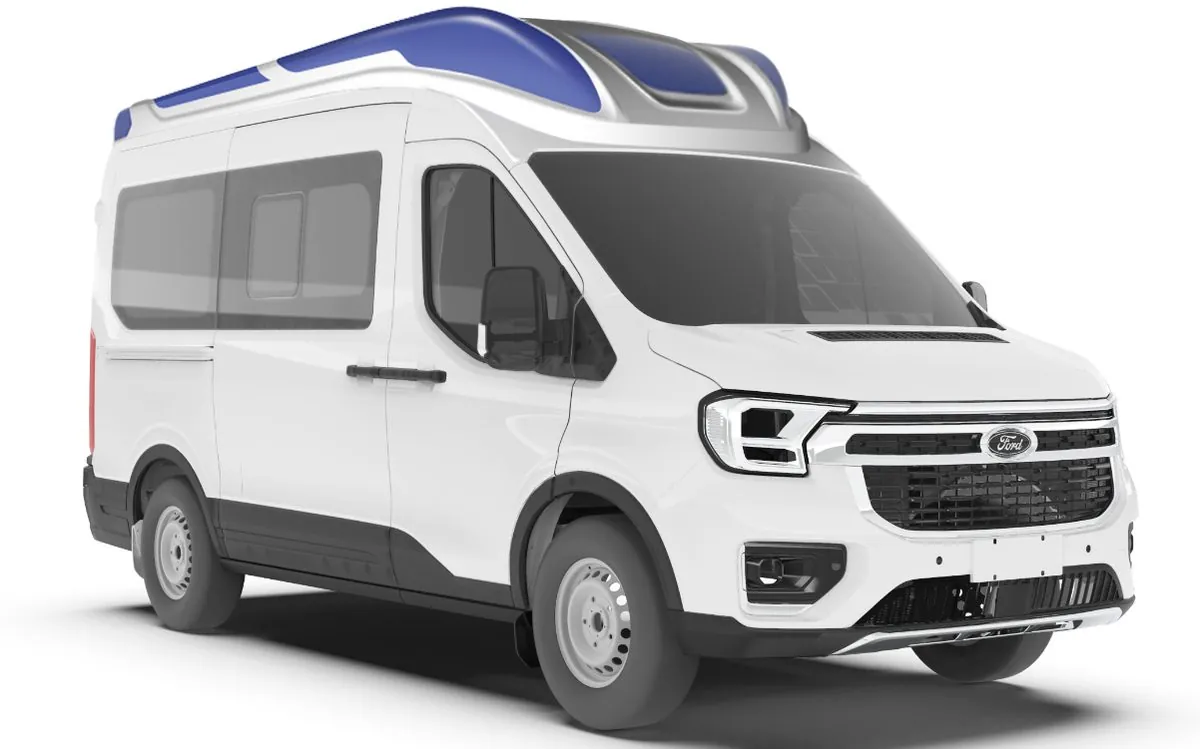
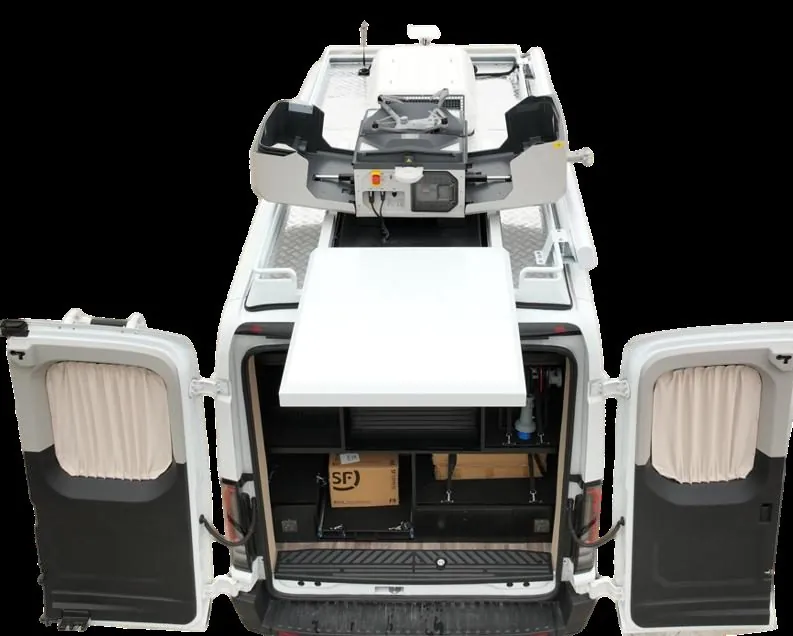
An L4 autonomous ground vehicle carrying its own drone, so one platform patrols on the ground and observes from the air. The ground unit handles long, dull, repetitive routes; the drone launches when something needs a closer look or a wider view, without waiting for a human crew to arrive.
| Platform | L4 autonomous ground vehicle with a vehicle-mounted drone dock |
|---|---|
| Patrol mode | Predefined route patrol with remote takeover and live video |
| Drone | Automatically launched and recovered from the vehicle dock |
| Sensors | Ground cameras, and aerial camera on the drone |
| Connectivity | Private network or 5G backhaul to a control room |
| Delivery | Complete platform with route mapping and control-room integration |
Most security patrol work is not dangerous, it is boring. A guard driving the same perimeter at two in the morning sees less than the vehicle's own cameras, and the cost of staffing that route is permanent. An autonomous patrol platform does not replace people — it removes the part of the job that people are worst at, which is sustained attention on a repetitive route.
The air-ground combination solves the main weakness of ground robots: they see at one metre. When the ground unit detects something, the drone launches from its dock, climbs, and gives the control room a view of what is actually happening — a person at a fence line, a vehicle where no vehicle should be, a fire starting in a storage yard.
Operation is deliberately supervised. The vehicle runs a mapped route, transmits video, and hands control to a human when it meets an unmapped obstacle or an ambiguous situation. The control room can take over at any time.
Each configuration is a starting point — equipment, layout and finish are set per order.
Fixed route patrol with drone launch on detection and a control-room dashboard.
Route patrol with thermal imaging for hot-work and tank-farm monitoring.
Crowd observation with a mapped route around a venue perimeter.
Solar-assisted charging and low-bandwidth reporting for sites without power.
The same platform carries different fit-outs depending on who operates it.
Night patrol of large yards where fixed cameras have blind spots.
Perimeter checks of substations and treatment works.
Perimeter and crowd observation before and during an event.
Every unit is re-engineered to your specification.

Drone flight control, satellite communication, voice and video conferencing plus monitoring — a complete forward operations base.

Carries a large tethered drone with loudhailer, lighting and signal-relay modules for sustained high-altitude coverage.
It drives autonomously on a mapped route and launches the drone automatically. Supervision is retained: the control room can take over, and the vehicle stops and requests assistance when it meets a situation outside its mapped behaviour.
The vehicle stops and holds position rather than continuing blind. Recovery depends on the network design, which we agree at specification stage.
That depends entirely on your jurisdiction. In most markets this platform is deployed on private sites. Public-road operation requires local approval that the buyer must obtain; we will not present it as a road-legal vehicle.
Straight answers from our engineering and export teams.
A drone command vehicle carries the aircraft, the ground control stations, the data link and the operators, and…
TechnicalCan you build a vehicle to our own specification rather than a catalogue model?Yes. Every unit is built to order, and a fully custom specification is a normal project rather than an exception. The…
TechnicalWhich chassis options are available for a conversion?Chassis selection is driven by payload, wheelbase, drive configuration and local service support, not by brand…
Send the site layout, the route length and the control-room setup. We will confirm whether autonomous patrol fits.